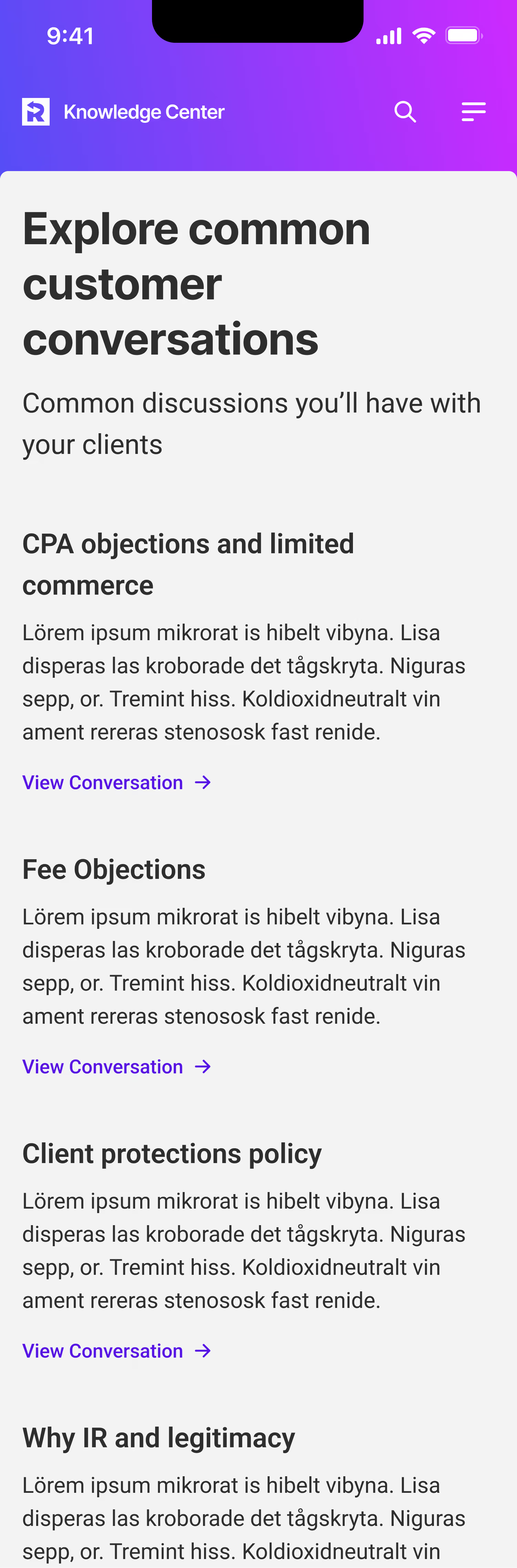
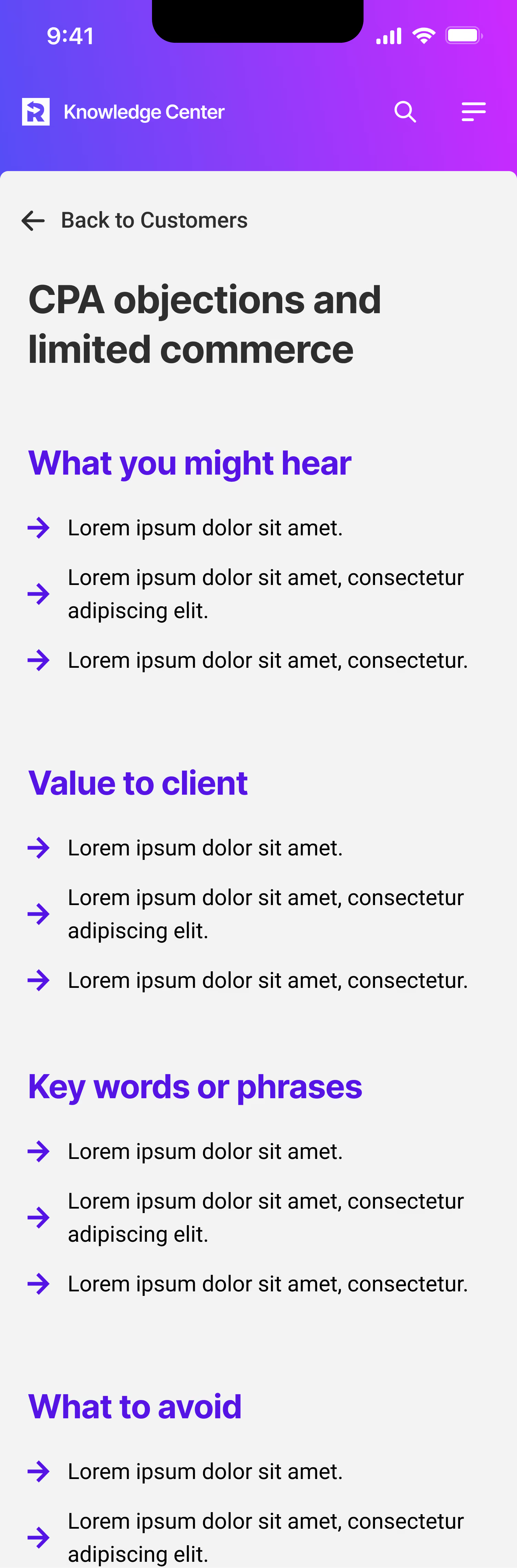
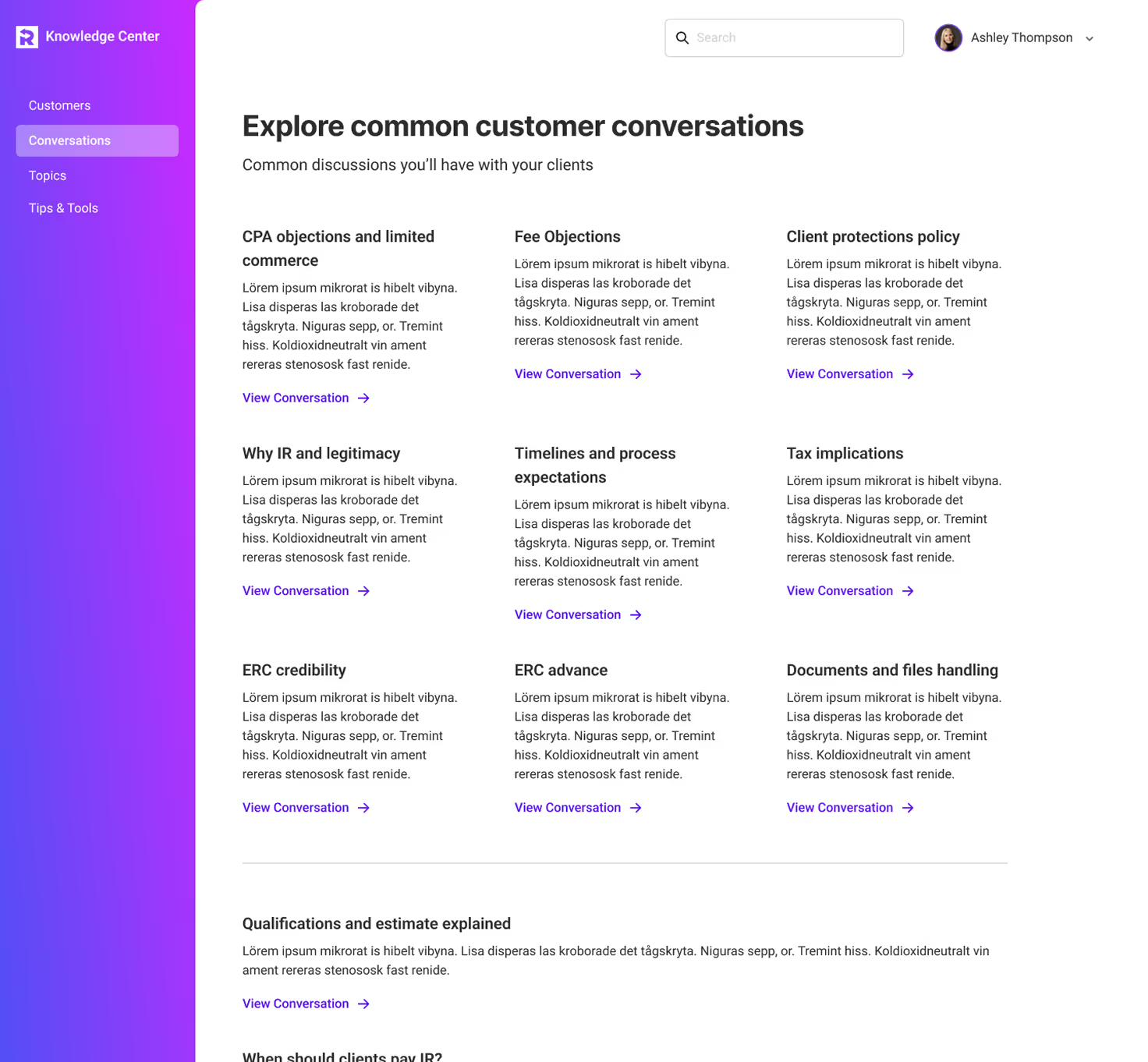
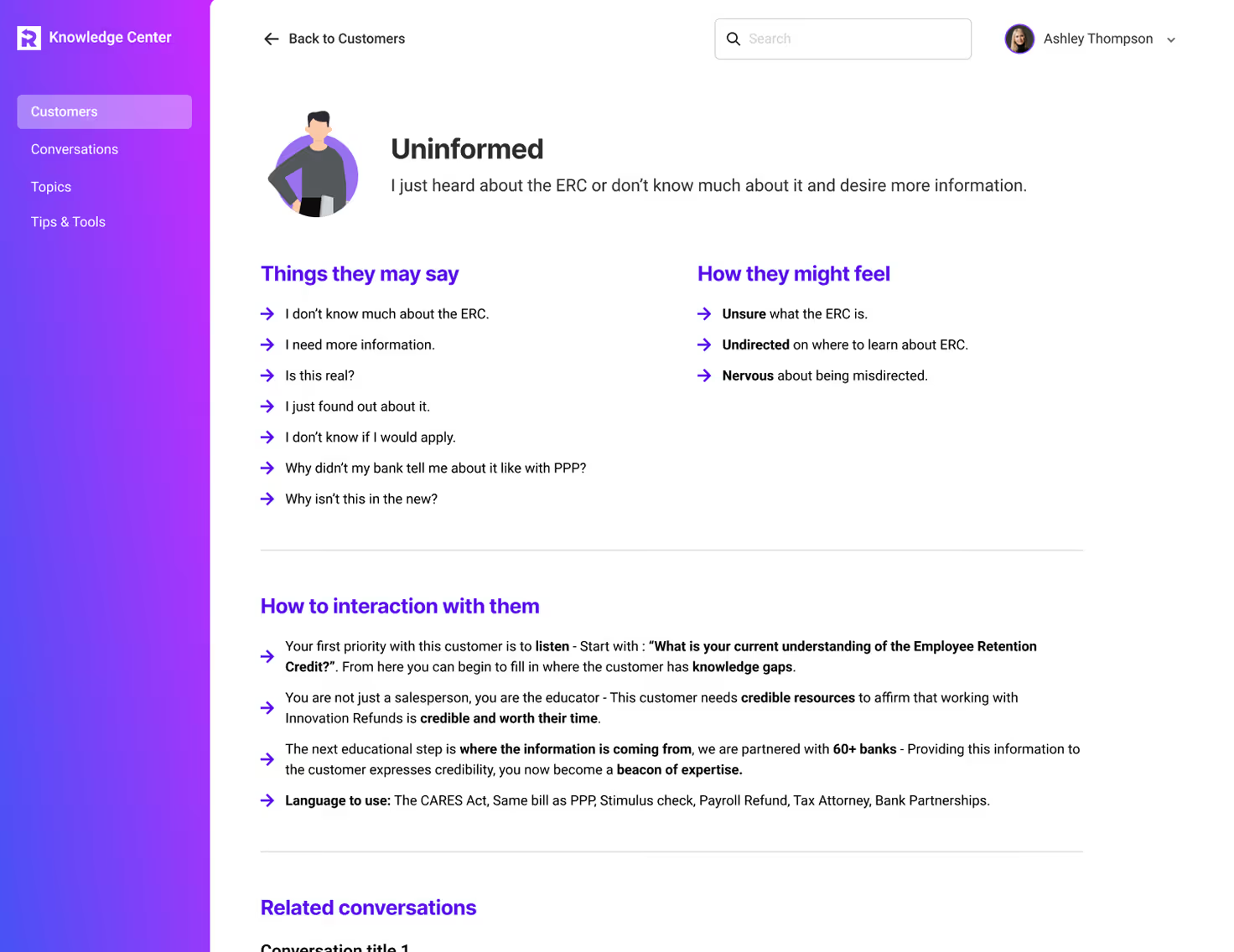
Grounding the challenge in real sales and customer work
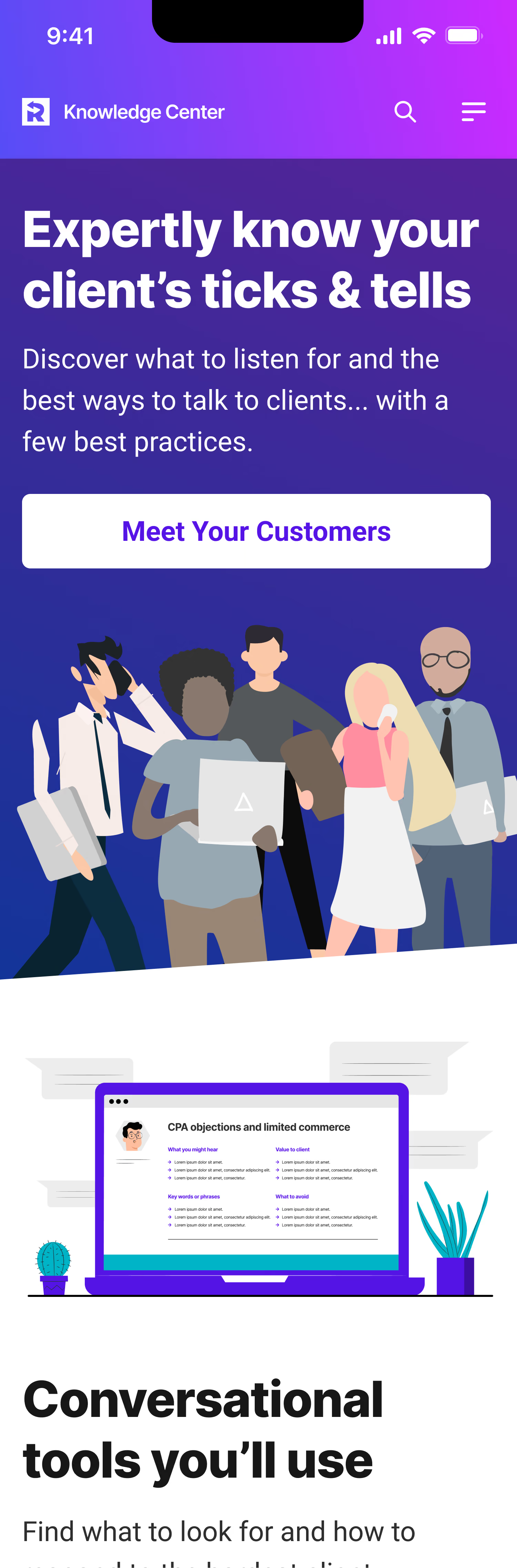
Discovery focused on how sales teams learned, retained, and reused knowledge, and how customers experienced that information in live conversations. The existing approach relied heavily on individual expertise, documents, and long email threads that took time to search and keep current.
As the organization grew, a shared source of truth became increasingly important for keeping guidance current and consistent across teams.
Research approach
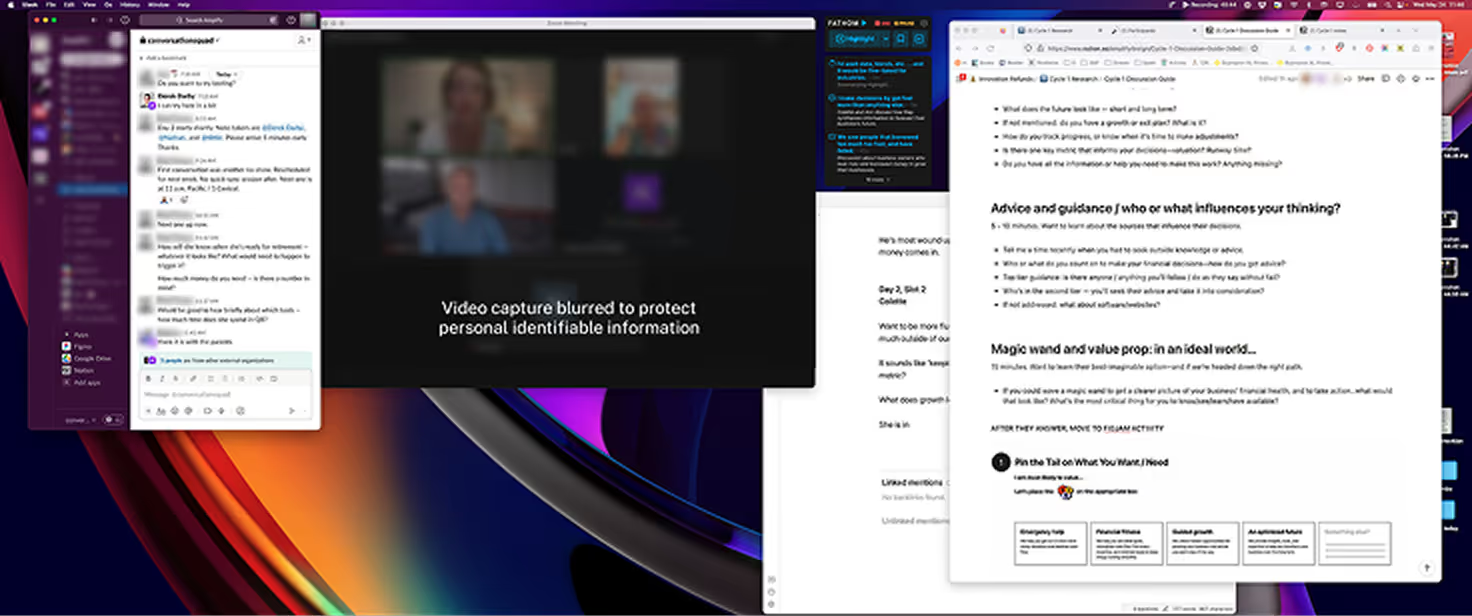
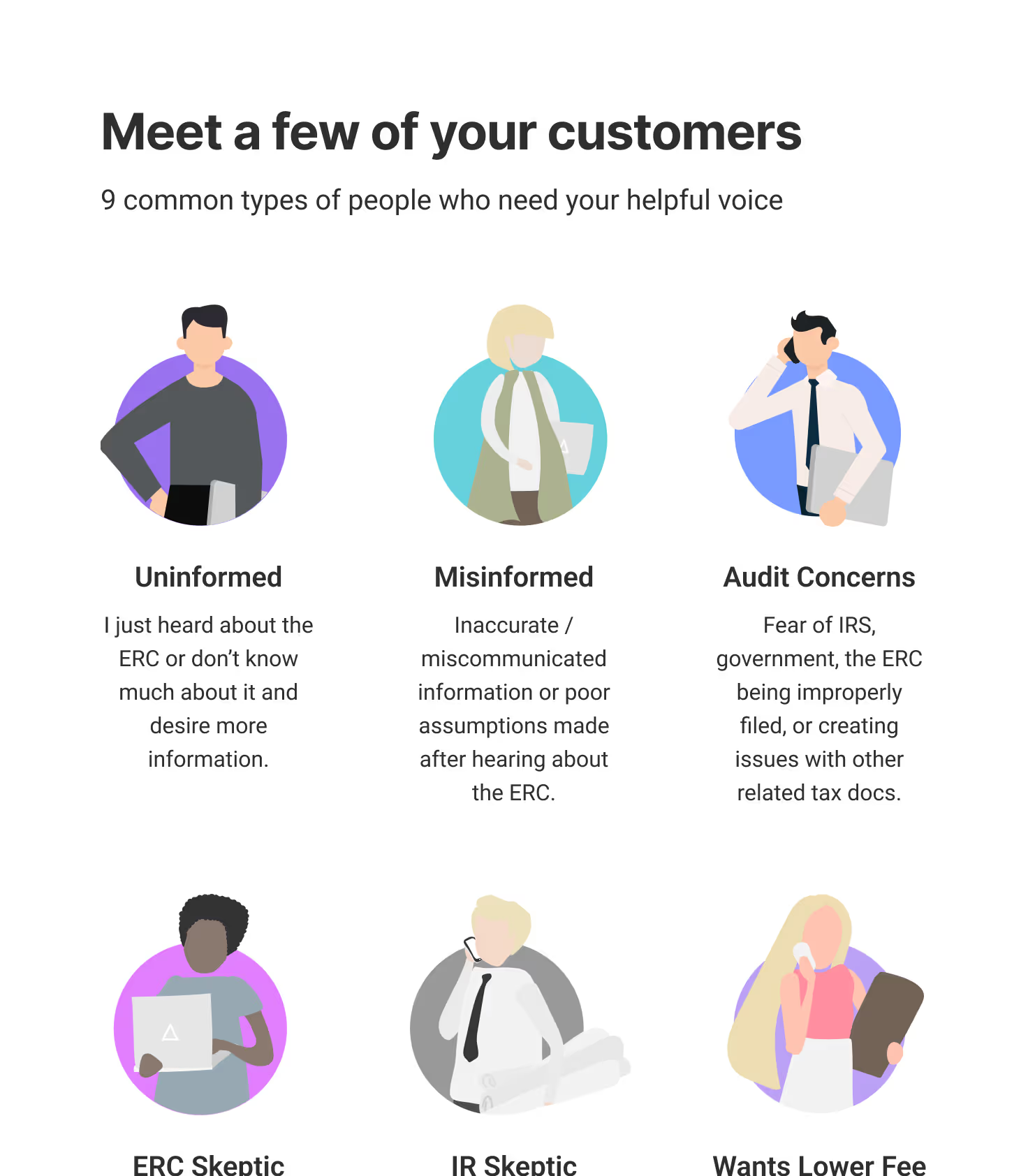
Discovery combined multiple inputs so patterns were confirmed across sources and grounded in repeated evidence. I partnered with a specialized research firm to conduct moderated customer interviews while remaining hands-on in planning, live sessions, and synthesis. In parallel, I led large-scale surveys across 300+ responses to understand demographics, motivations, and behavioral differences across small business owners and more entrepreneurial operators.
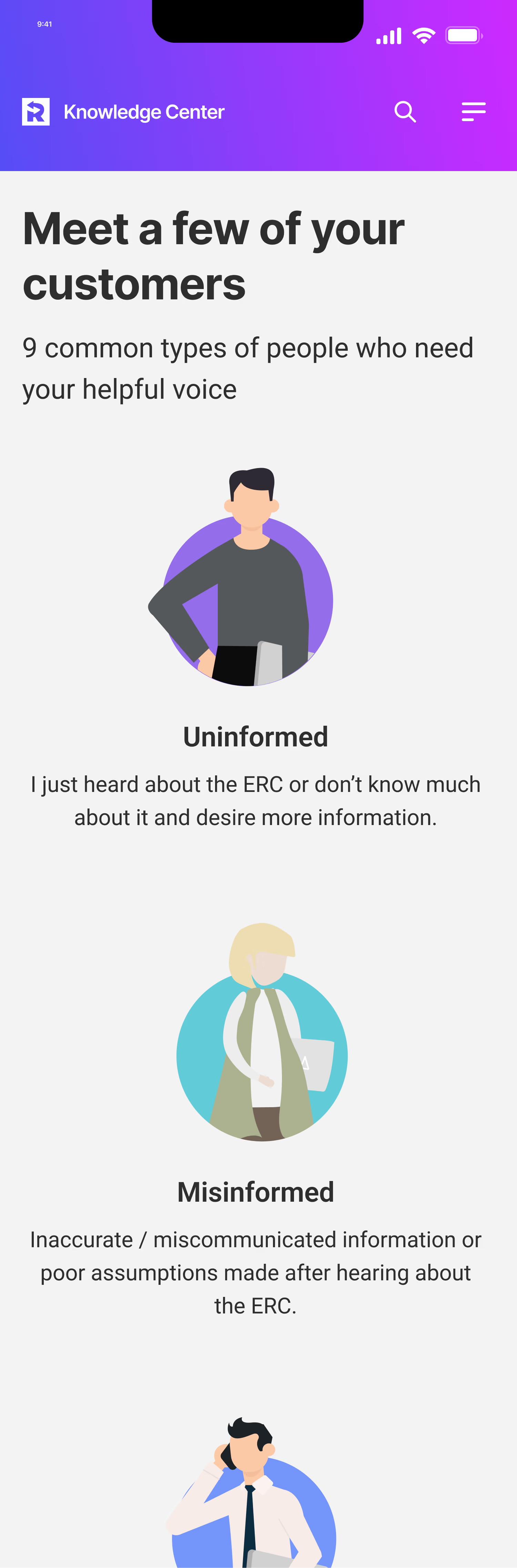
Interviews started broad to surface themes, then narrowed into deeper sessions with selected participants and internal SMEs to validate assumptions and separate edge cases from core needs. Personas were derived from customer research and extensive sales team input, then reviewed with sales to ensure they reflected real objections, decision dynamics, and conversation flow.
Different buyer mindsets in the same sales funnel
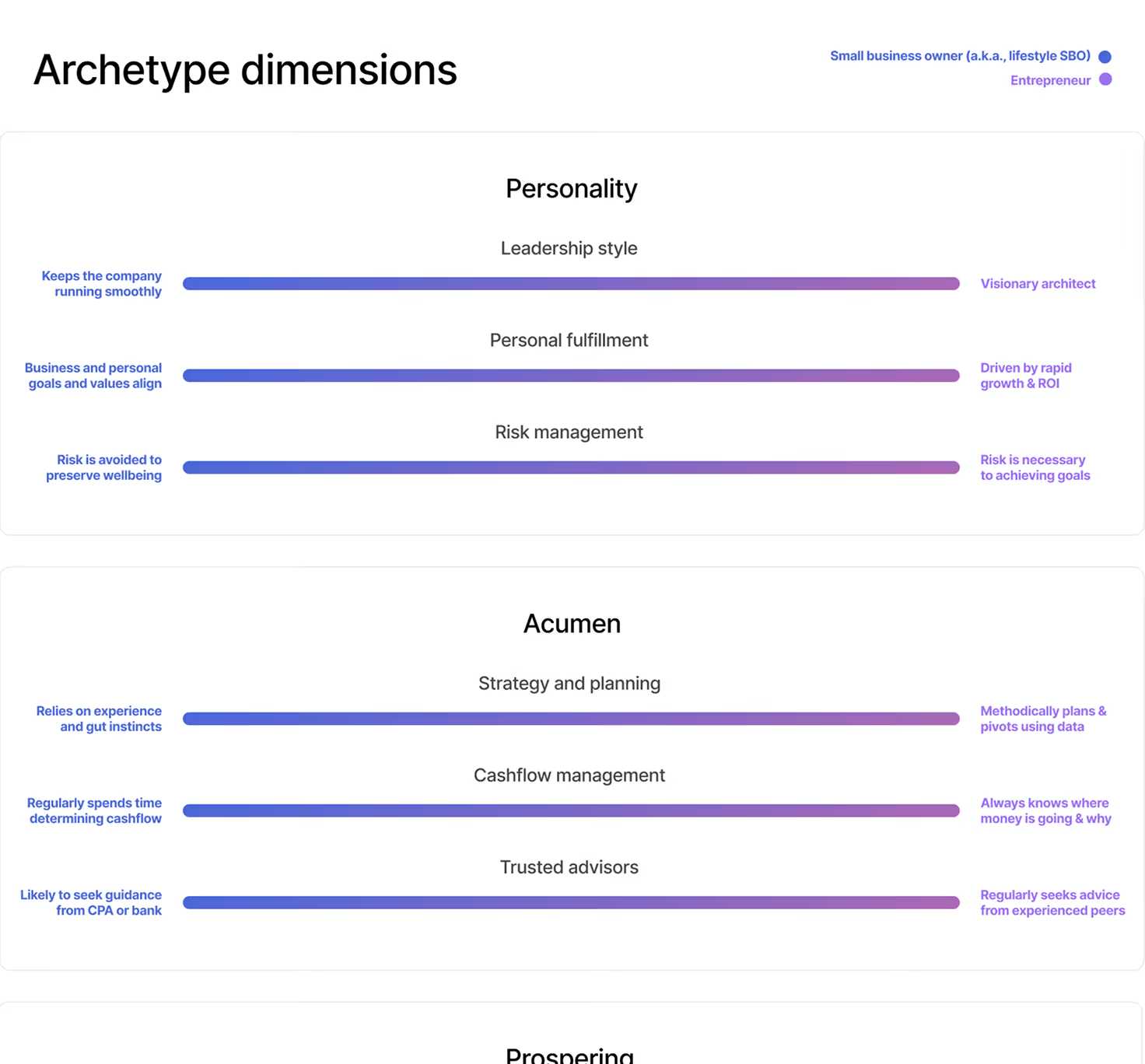
One key insight was the behavioral difference between compliance-oriented small business owners and more entrepreneurial operators, even at similar company sizes.
The two groups responded better to different levels of detail, reassurance, and speed. I mapped the key behavioral dimensions across both archetypes so guidance could adapt by audience while keeping the core message consistent.
- SBOs prioritized certainty, documentation, and validation before moving forward.
- Entrepreneurs optimized for speed, upside, and strategic advantage, often tolerating more ambiguity.
Turning sales knowledge into structure
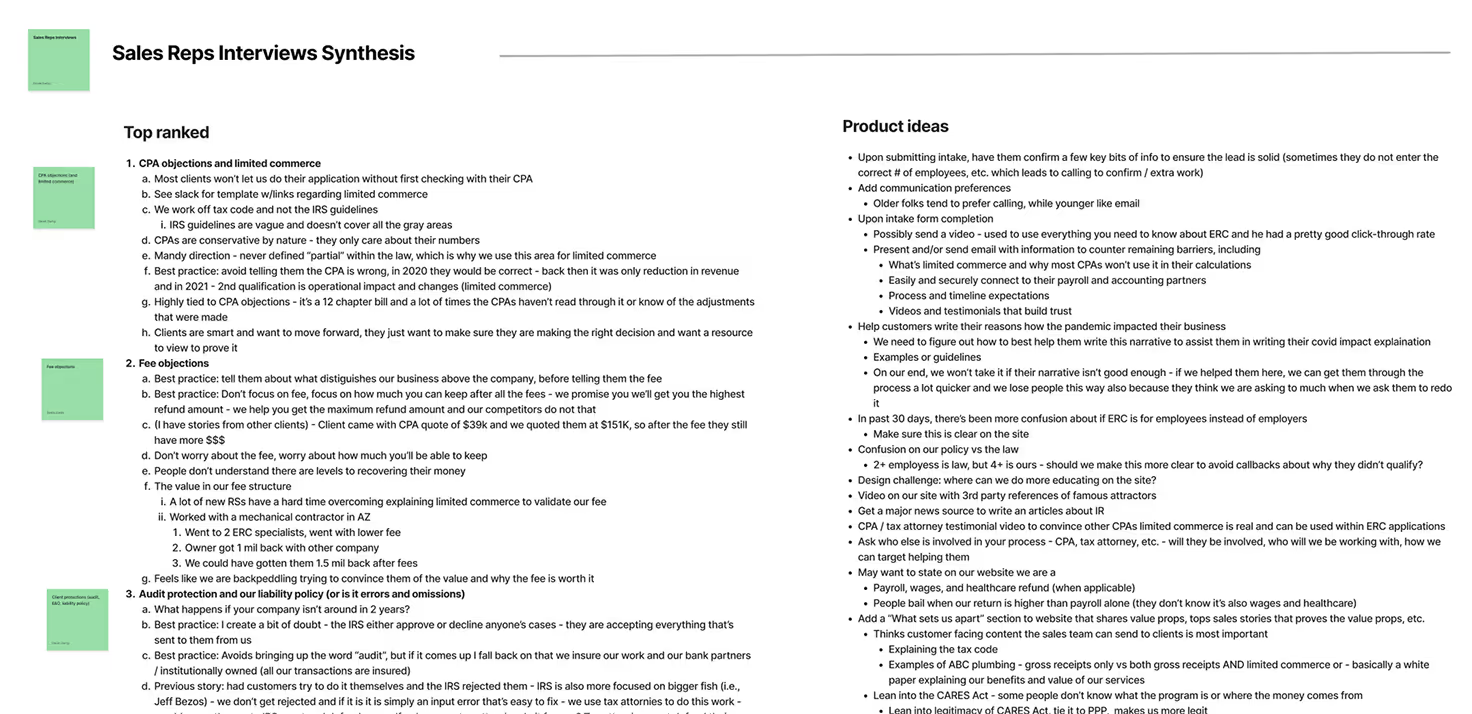
Sales teams held deep experience-based knowledge about objections, explanations, and successful framing, but much of it lived in conversations, personal notes, and memory.
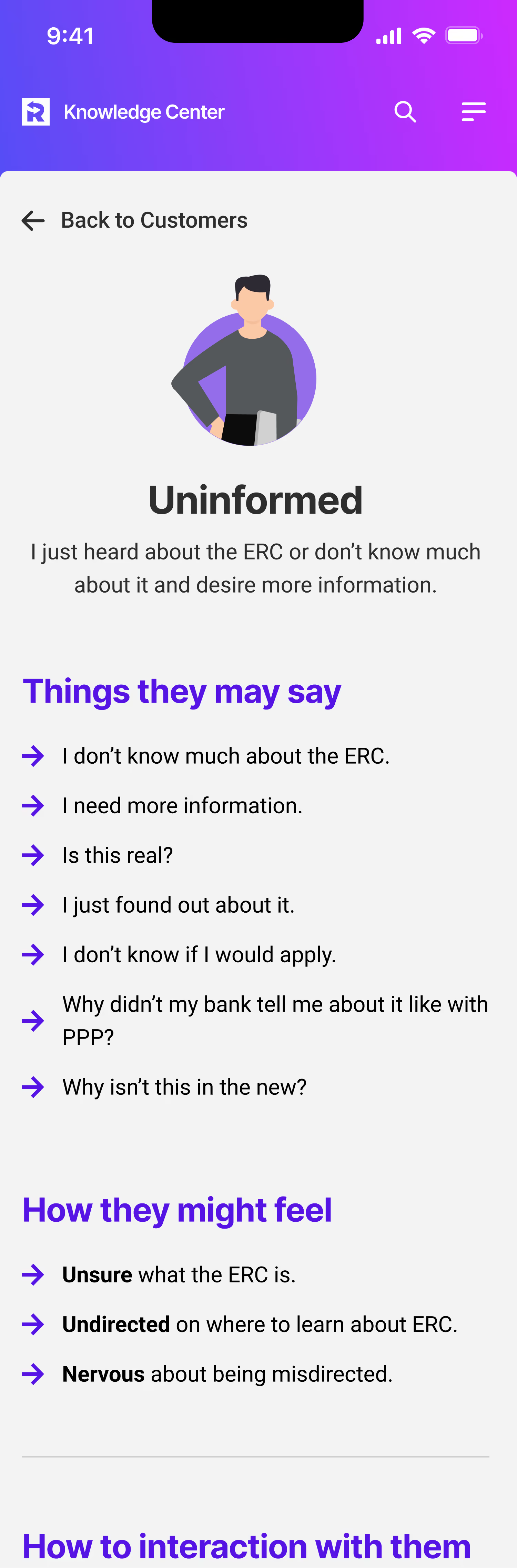
I synthesized interview data, call insights, FAQs, and survey findings into structured themes that reflected how reps reasoned through complex deals.
Synthesis focused on:
Personas and themes were validated with sales and used as working tools that directly informed content structure, language, and prioritization.
- Common objections and how they evolved during conversations
- Language patterns that built trust versus increased friction
- Where reps improvised when guidance was hard to find or keep current
- Information customers repeatedly asked for and wanted easier access to
From insight to direction
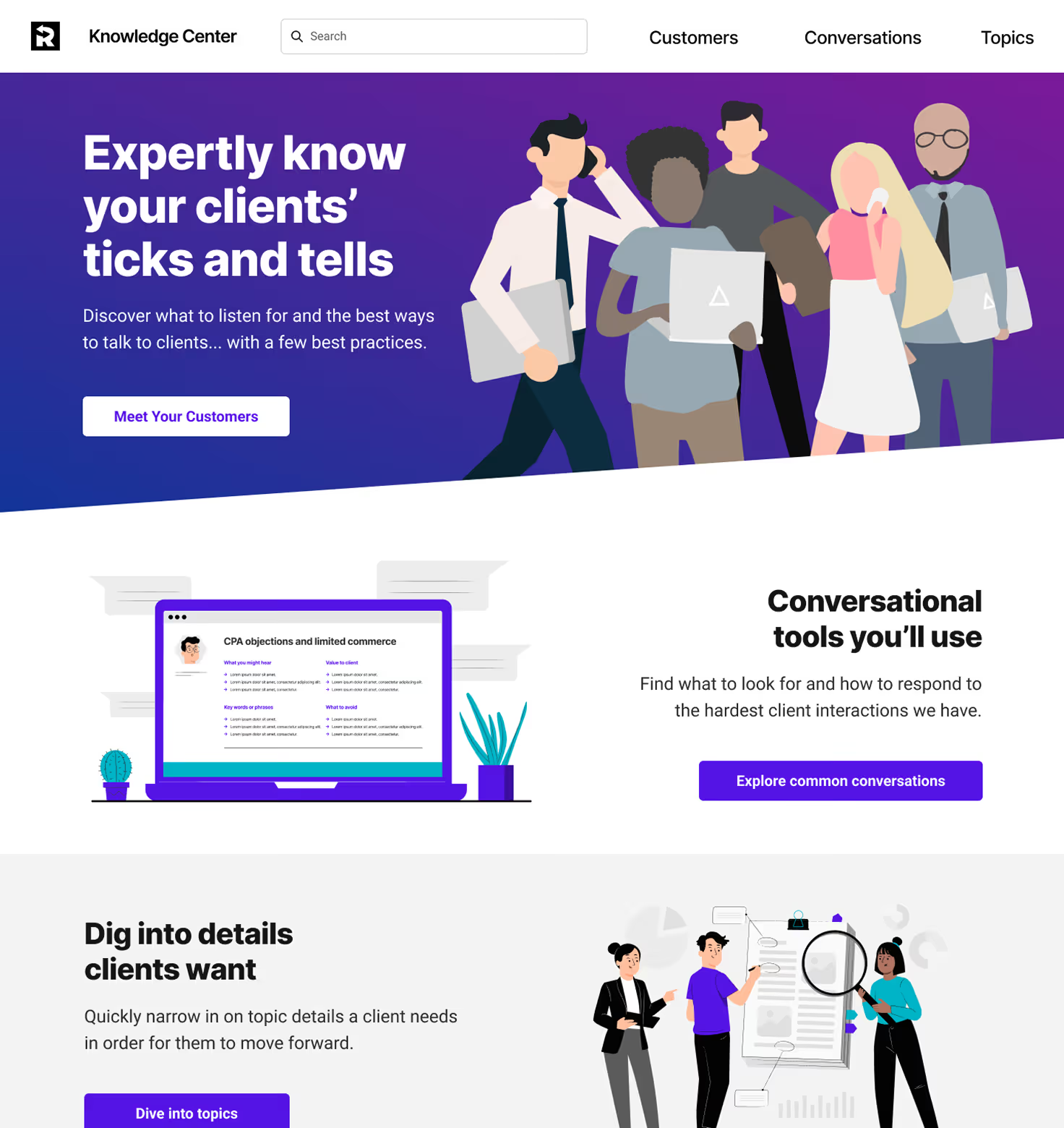
Discovery showed that the real opportunity was structure, context, and confidence. The information existed; the next step was making it easier to find, maintain, and apply in real conversations.
Any solution would need to:
These insights directly shaped how the system was framed, organized, and designed in later phases.
- Make expert knowledge easy to access and reuse without oversimplifying it
- Support different customer mindsets without forcing reps to improvise
- Keep relevant context visible during live conversations
- Evolve as products, policies, and messaging changed