Connecting products around the learner
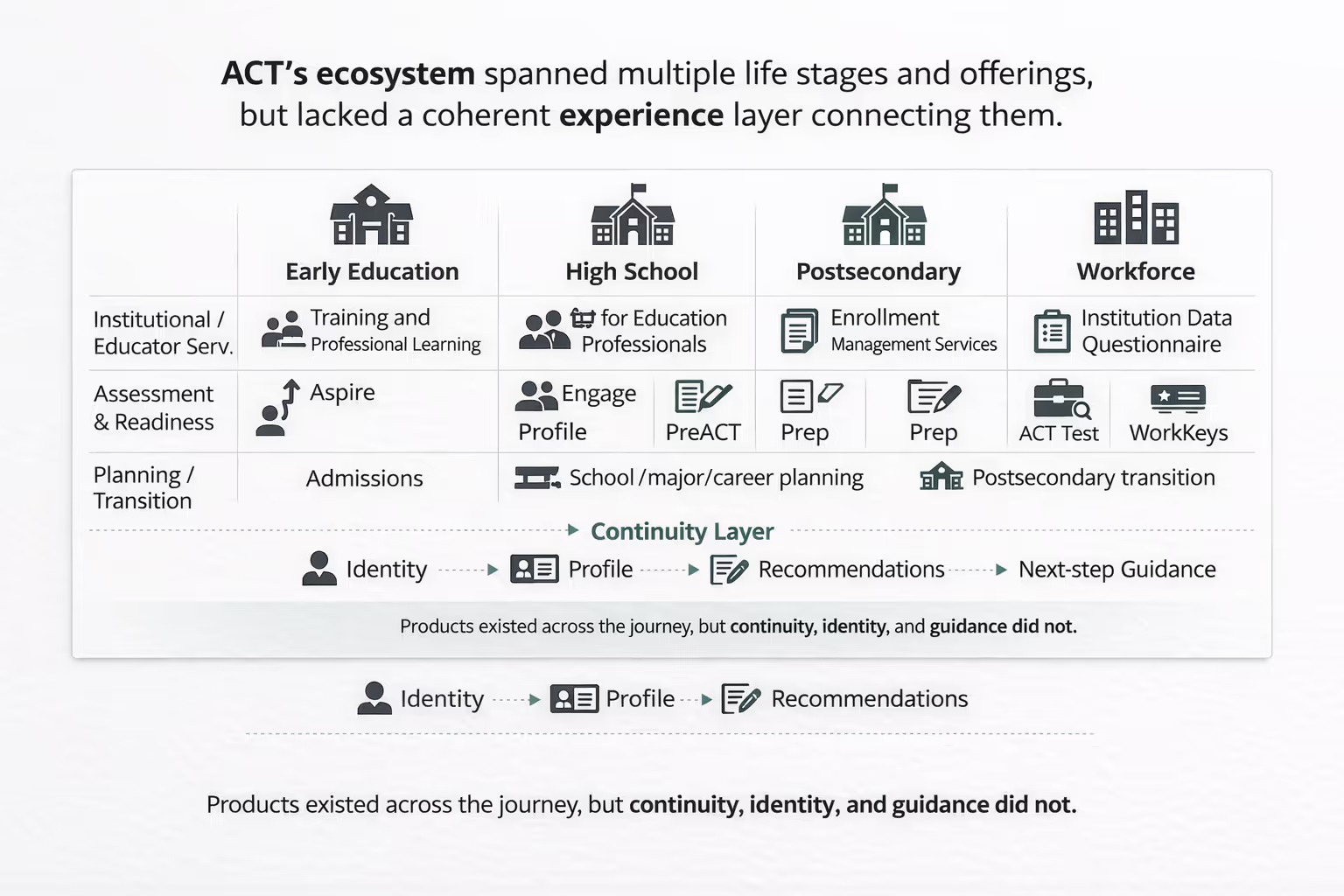
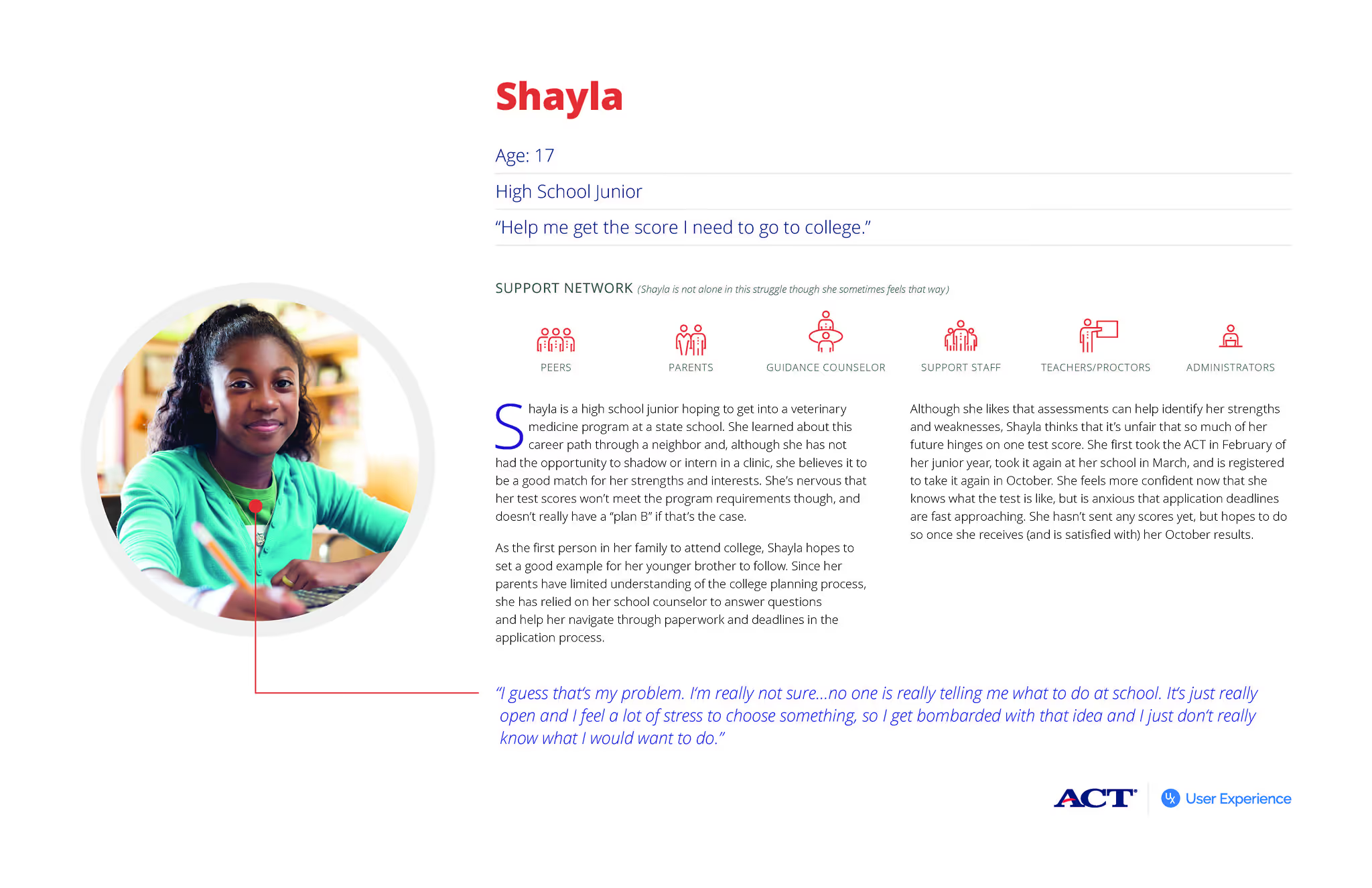
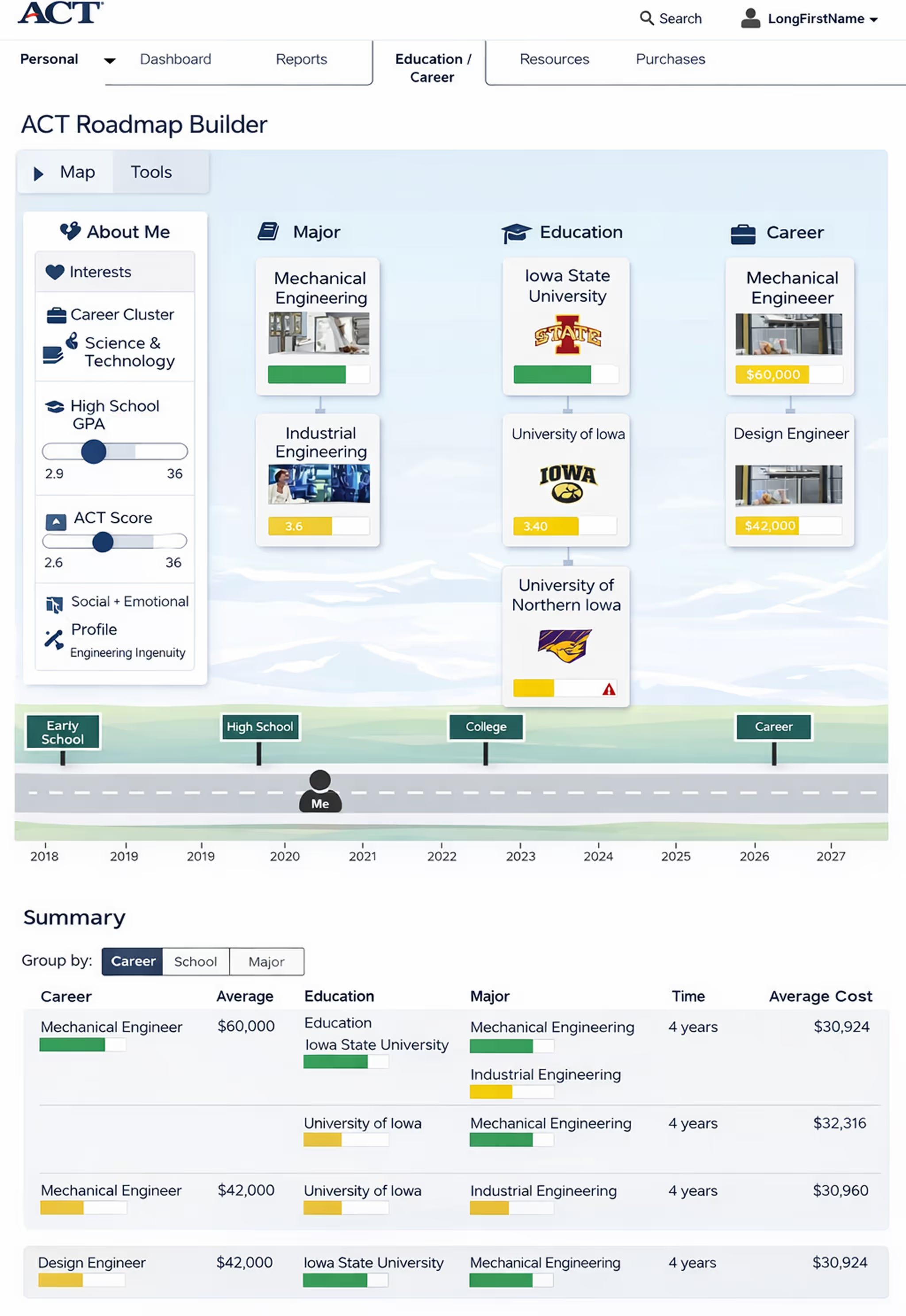
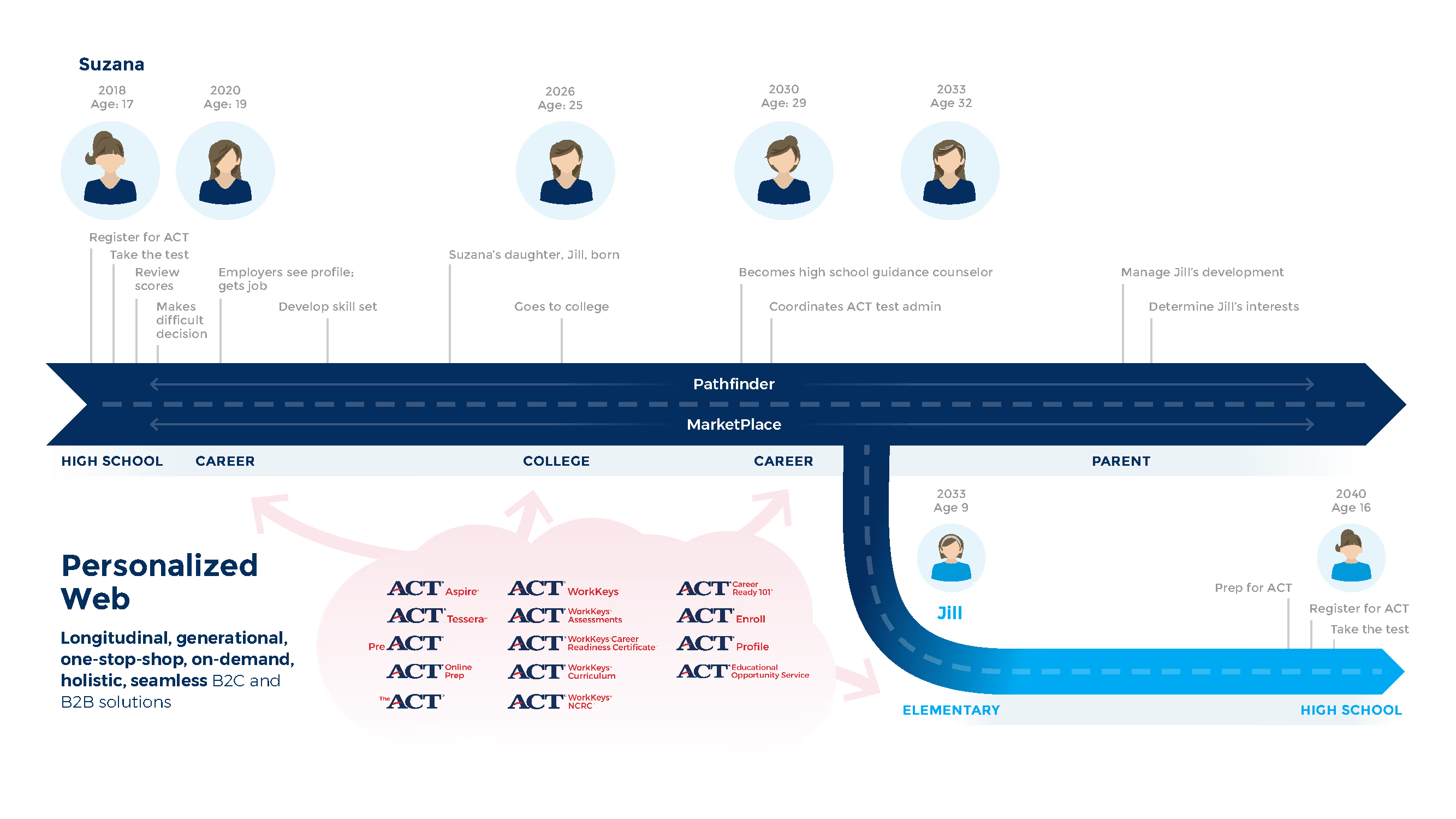
ACT had built a broad portfolio of assessments, prep tools, diagnostics, reporting systems, and planning products across students, parents, counselors, educators, institutions, and workforce pathways. But these offerings evolved more as separate products than as a connected learner experience.
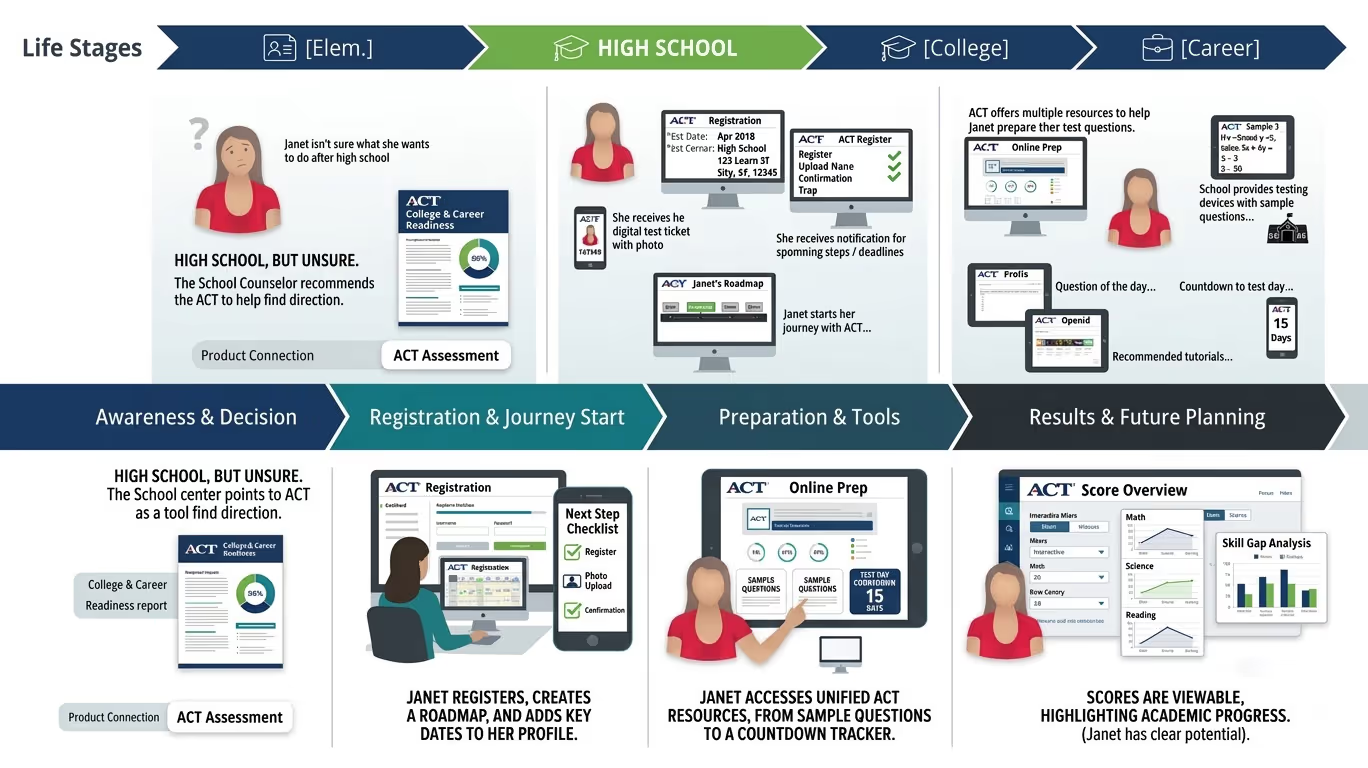
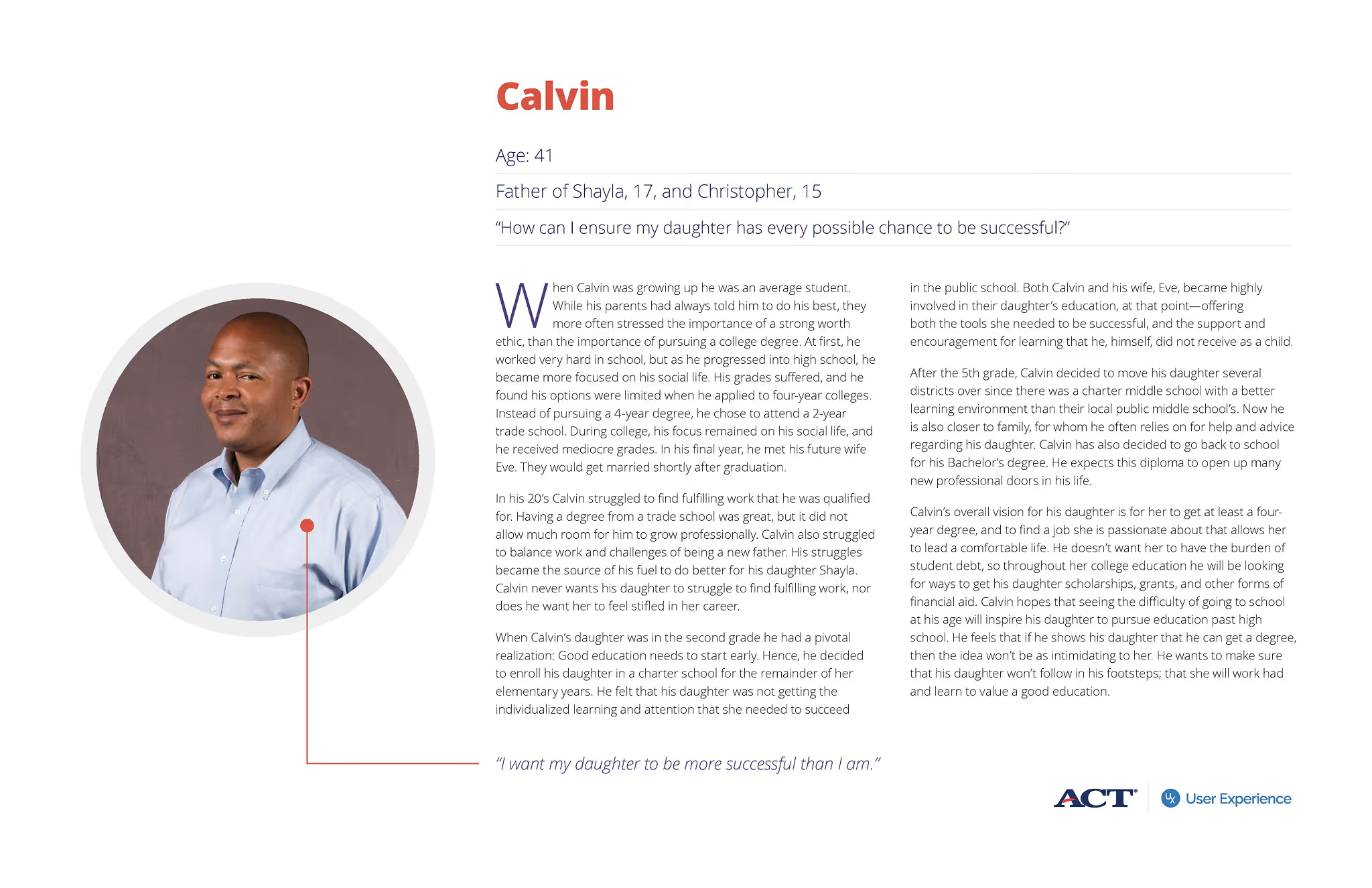
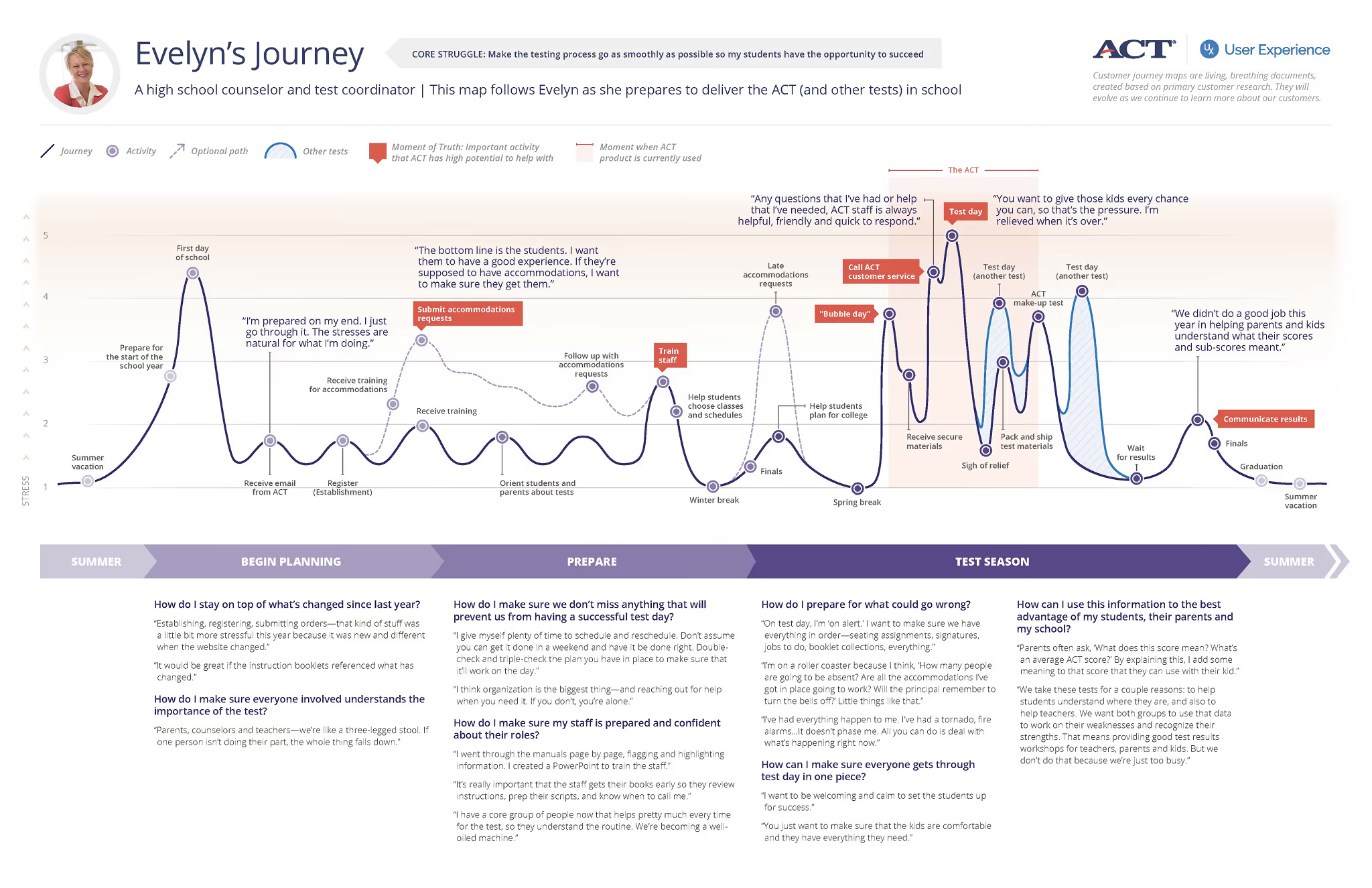
As a result, students and families encountered ACT through isolated moments such as registration, testing, score reporting, prep, planning, or exploration. Each interaction could be useful on its own, but the ecosystem did not provide a clear sense of continuity, next steps, or how the pieces fit together over time.
This limited learner clarity, reduced cross-product value, and made it harder for ACT to express its broader role across school, postsecondary, and career decisions.
Ecosystem diagram showing ACT offerings across multiple life stages and the missing experience layer connecting them.
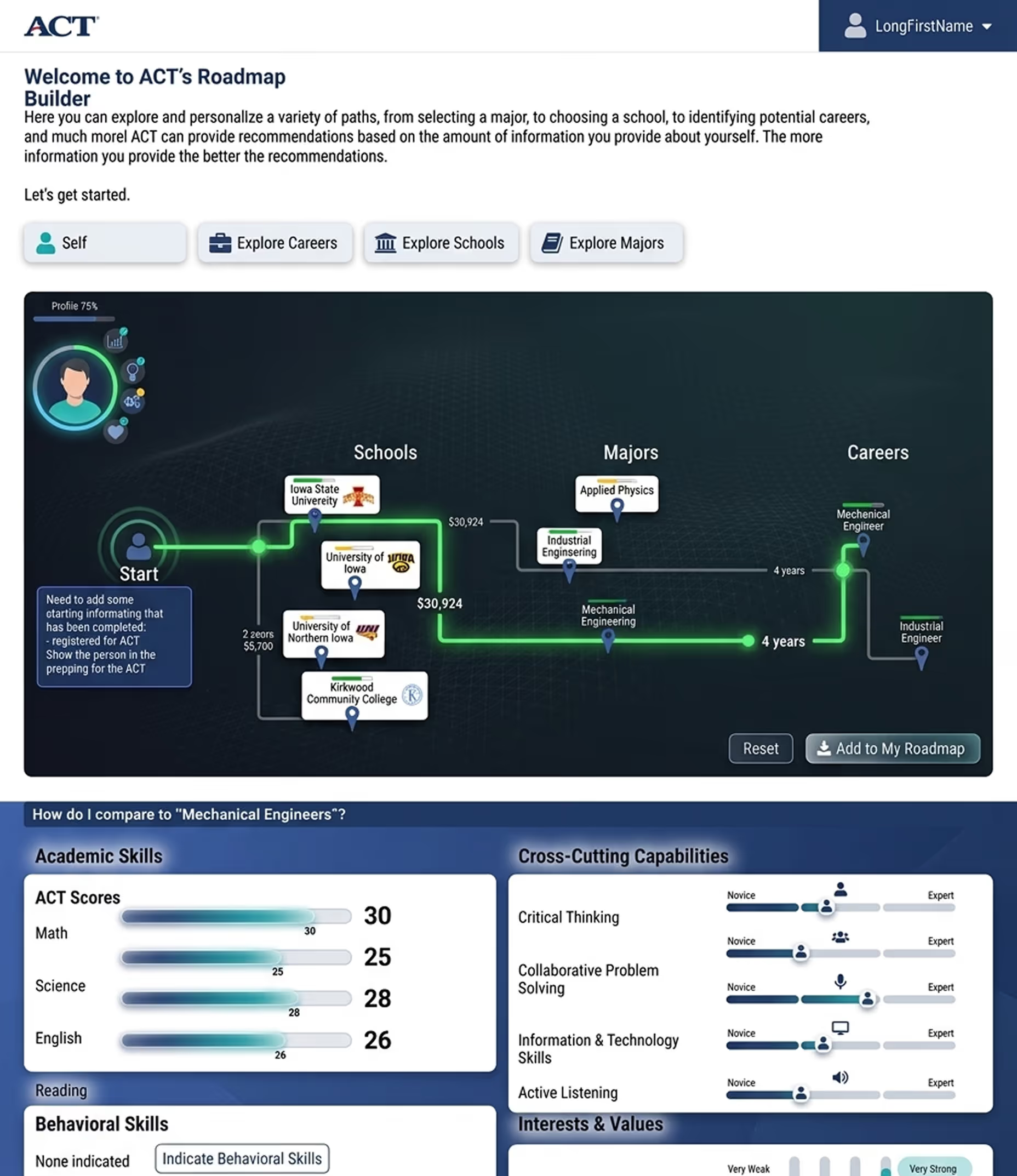
MyACT sat inside a larger ecosystem
I started with MyACT, but discovery quickly showed that the larger challenge lived across the surrounding ecosystem.
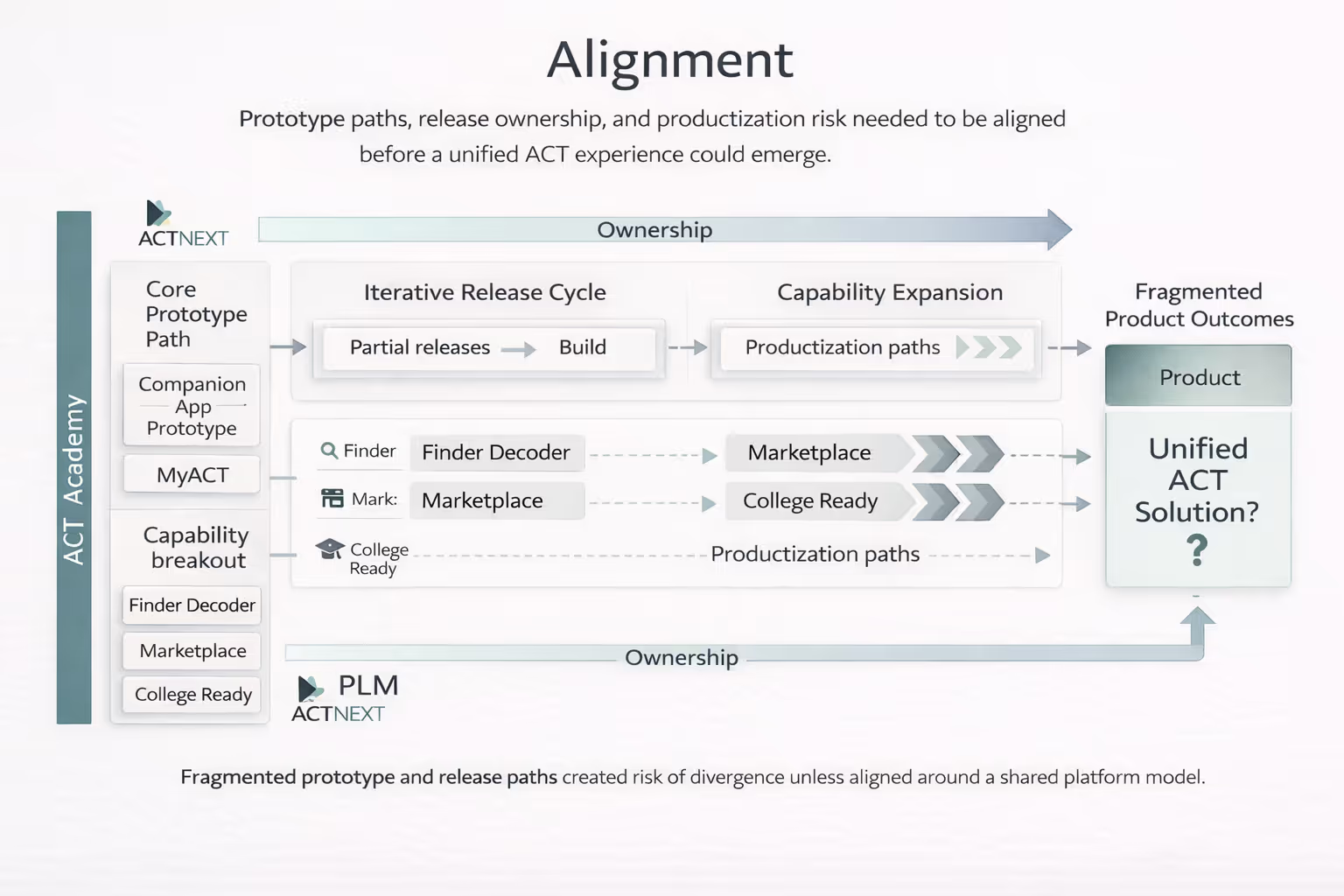
Identity systems, product roadmaps, tagging standards, and diagnostics had evolved independently across products. Recommendations, pathways, and actions were not connected by a shared experience layer.
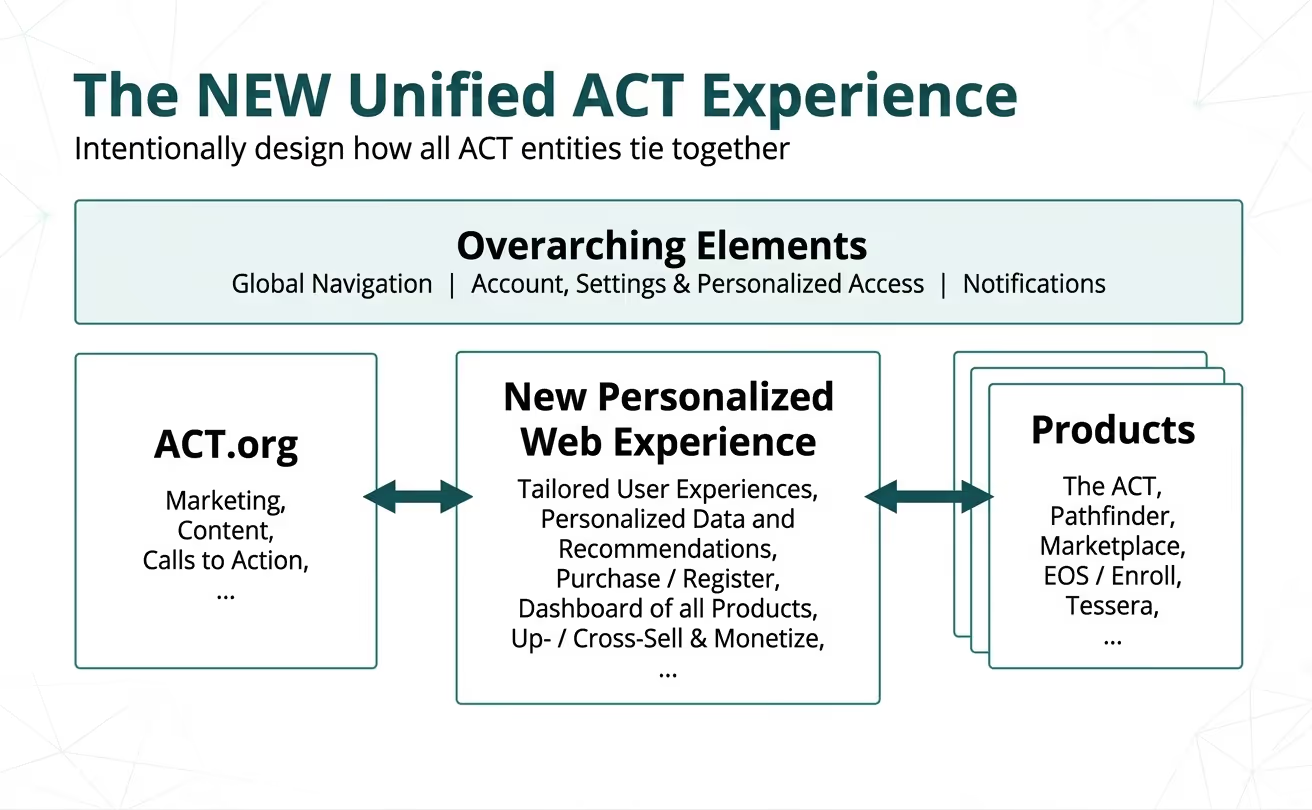
Connecting the experience meant working across identity, navigation, data, and product ownership throughout ACT’s ecosystem.
Designing for the full context
ACT’s ecosystem already contained many of the ingredients for a stronger learner experience. The challenge was that the underlying systems, product models, and organizational incentives were not aligned around continuity.
The strategy had to account for:
This made systems design and organizational alignment part of the UX challenge.
- Independent product roadmaps with a connected learner experience
- Assessment events with longitudinal learner support
- Different personas within one platform model
- Near-term roadmap needs with longer-term integration