Moving beyond assumptions
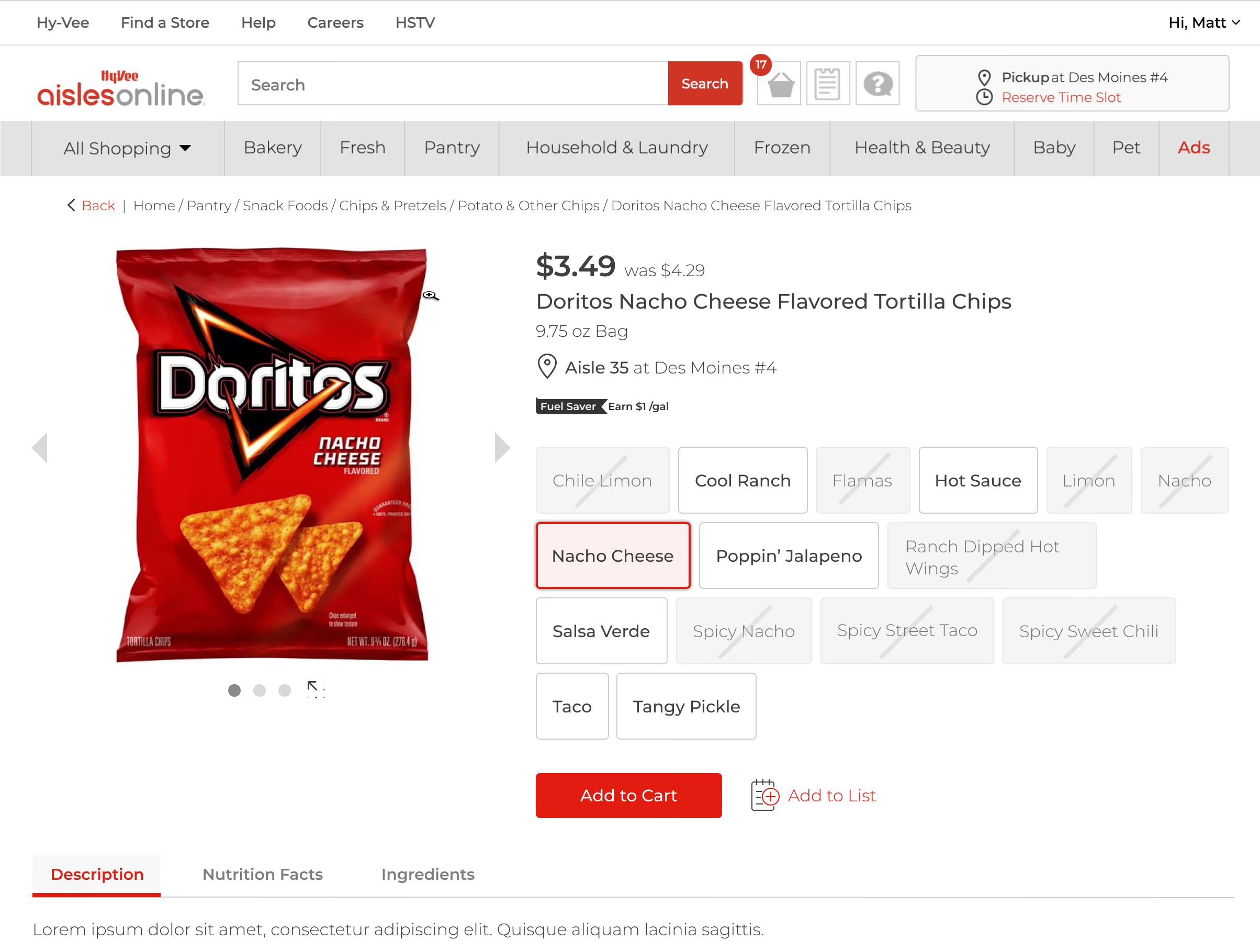
I studied variation behavior in real catalog data. The audit showed how product structure, governance, and interpretation across systems shaped the customer experience. I used those findings to define the rules before developing interface concepts.
Deep edge-case analysis
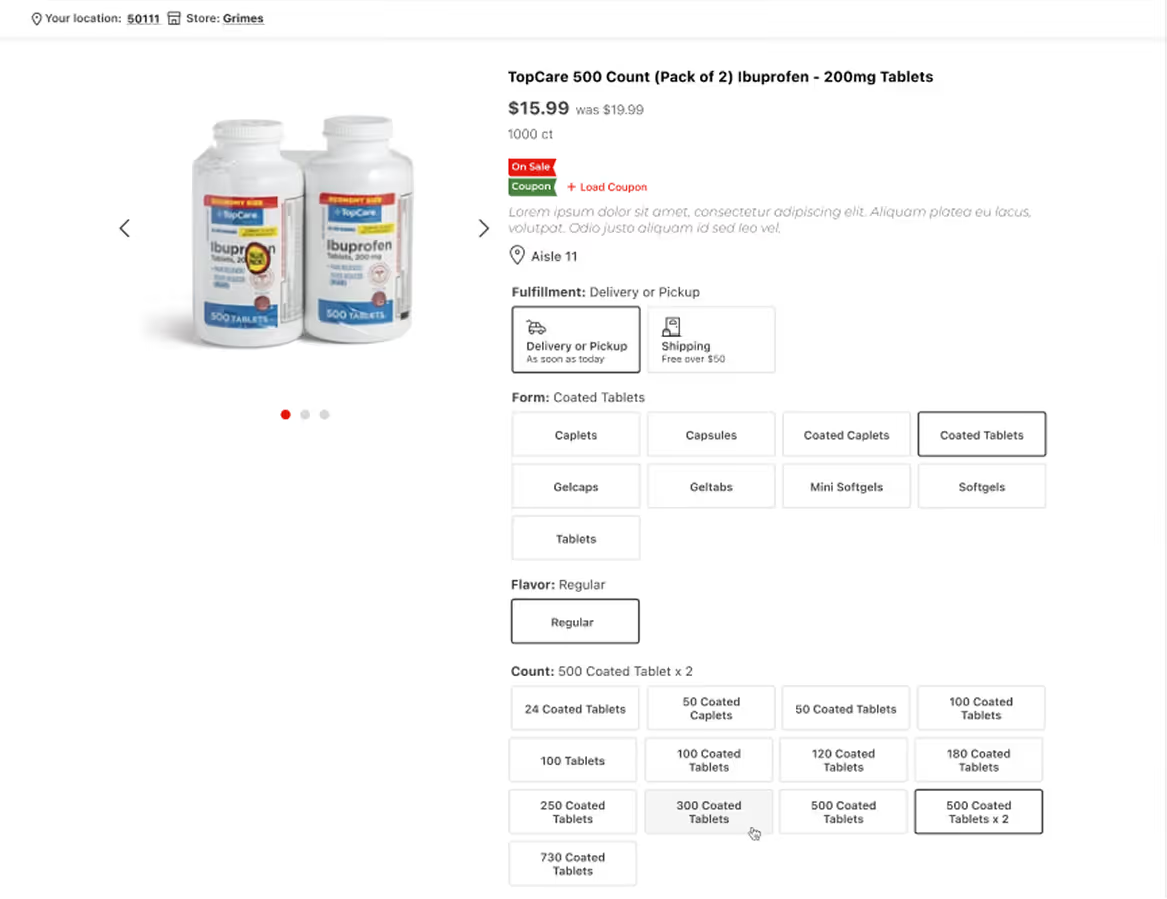
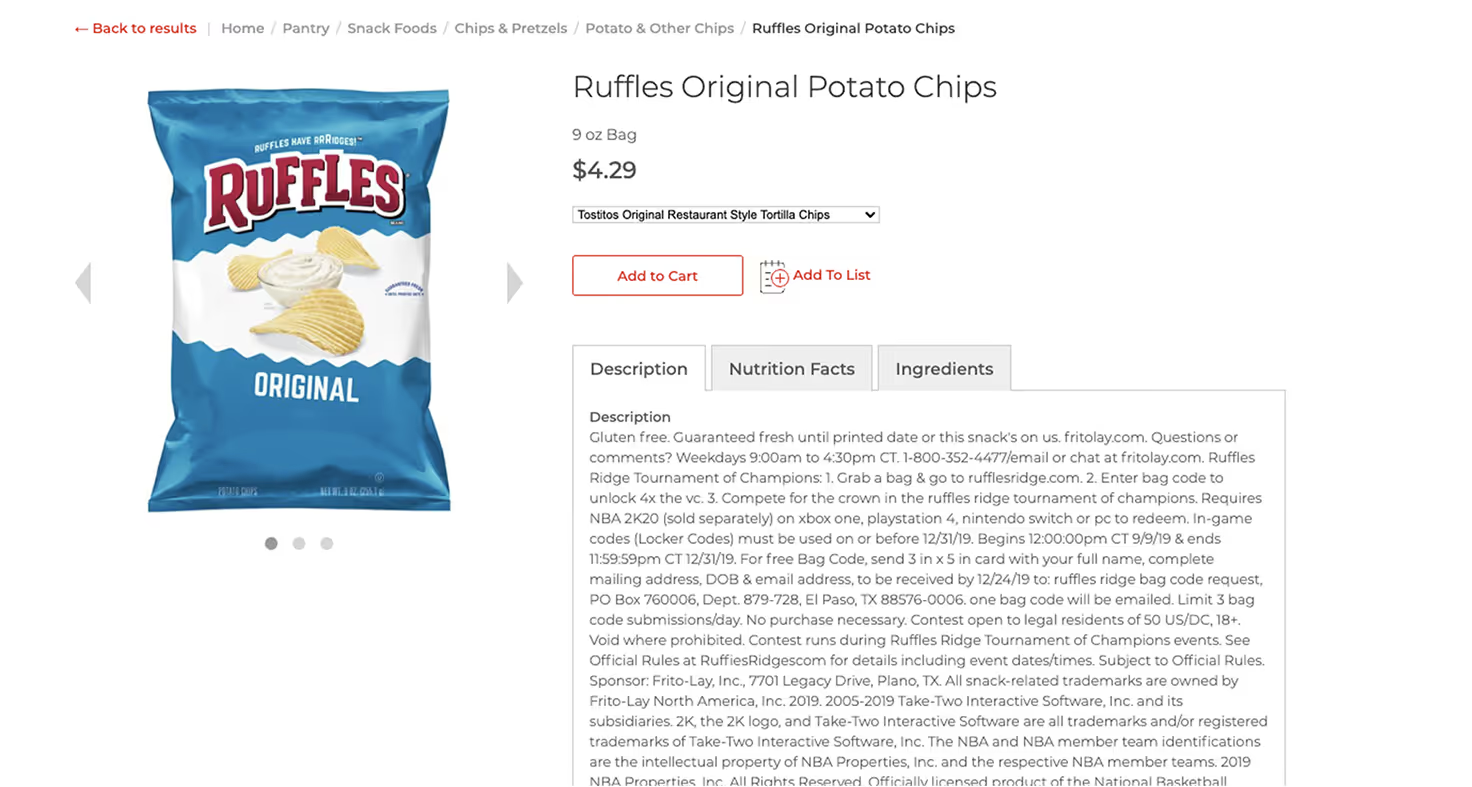
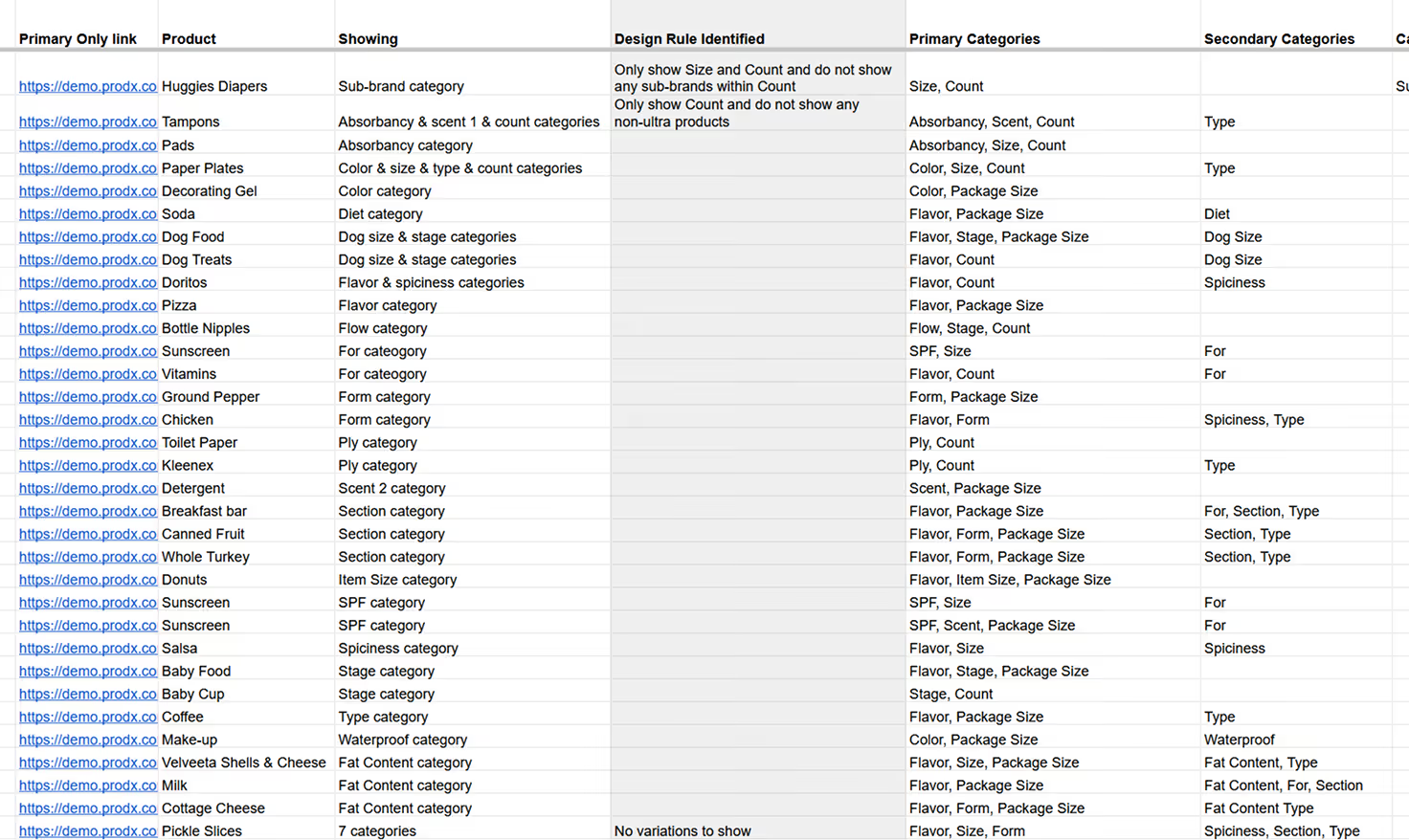
A core part of discovery involved auditing more than 100 edge-case products across categories.
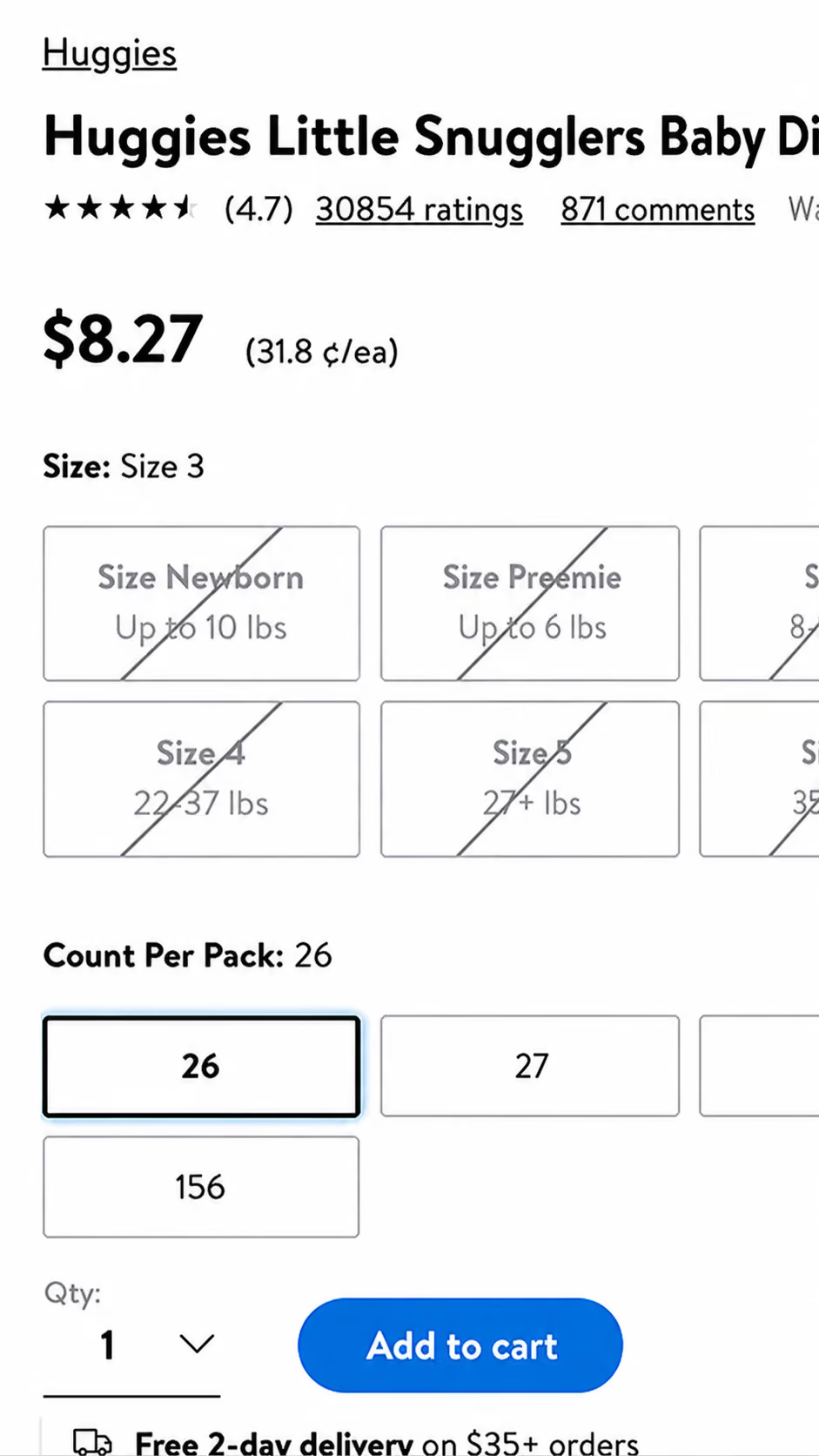
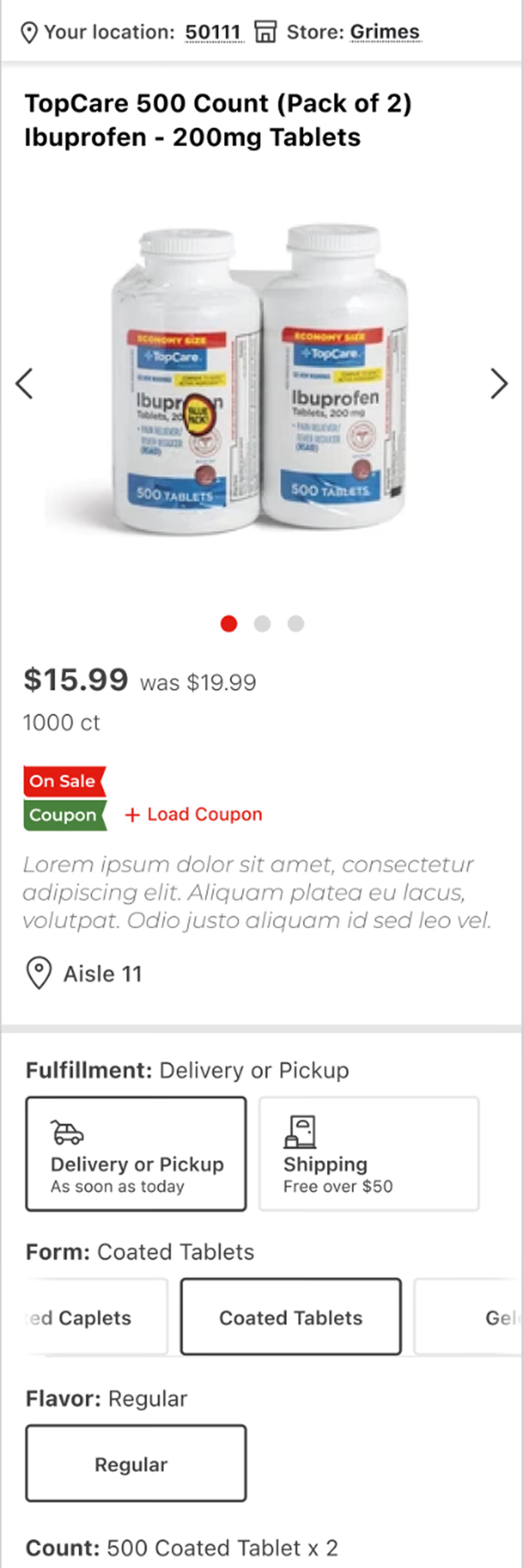
The audit covered real combinations of sizes, flavors, bundles, substitutions, and near-duplicates. Those examples showed where clearer product relationships and variation rules would help customers make informed choices.
Patterns emerged quickly:
The pattern was consistent enough that variation rules needed to be defined, validated, and enforced at the system level so interface decisions had a stable base.
To understand how the new ProdX variation system would behave in real conditions, I conducted a deep audit of edge-case products across categories.
This analysis surfaced category differences, ambiguous variation hierarchies, and edge cases that were not apparent in standard flows or vendor prototypes. Those findings became the basis for defining variation rules, testing system assumptions, and aligning Product, Engineering, and ProdX on what the experience needed to support.
- Products grouped as variations were often only loosely related
- Legitimate variations were frequently split apart
- Category-specific rules conflicted with global assumptions
- Small data inconsistencies produced disproportionately bad experiences
Cross-functional and best-practice research
In parallel, I led structured discovery across internal teams, competitive platforms, and industry research to test assumptions and identify proven patterns.
This included:
That gap between platform defaults and customer expectations made a rules-driven variation system necessary.
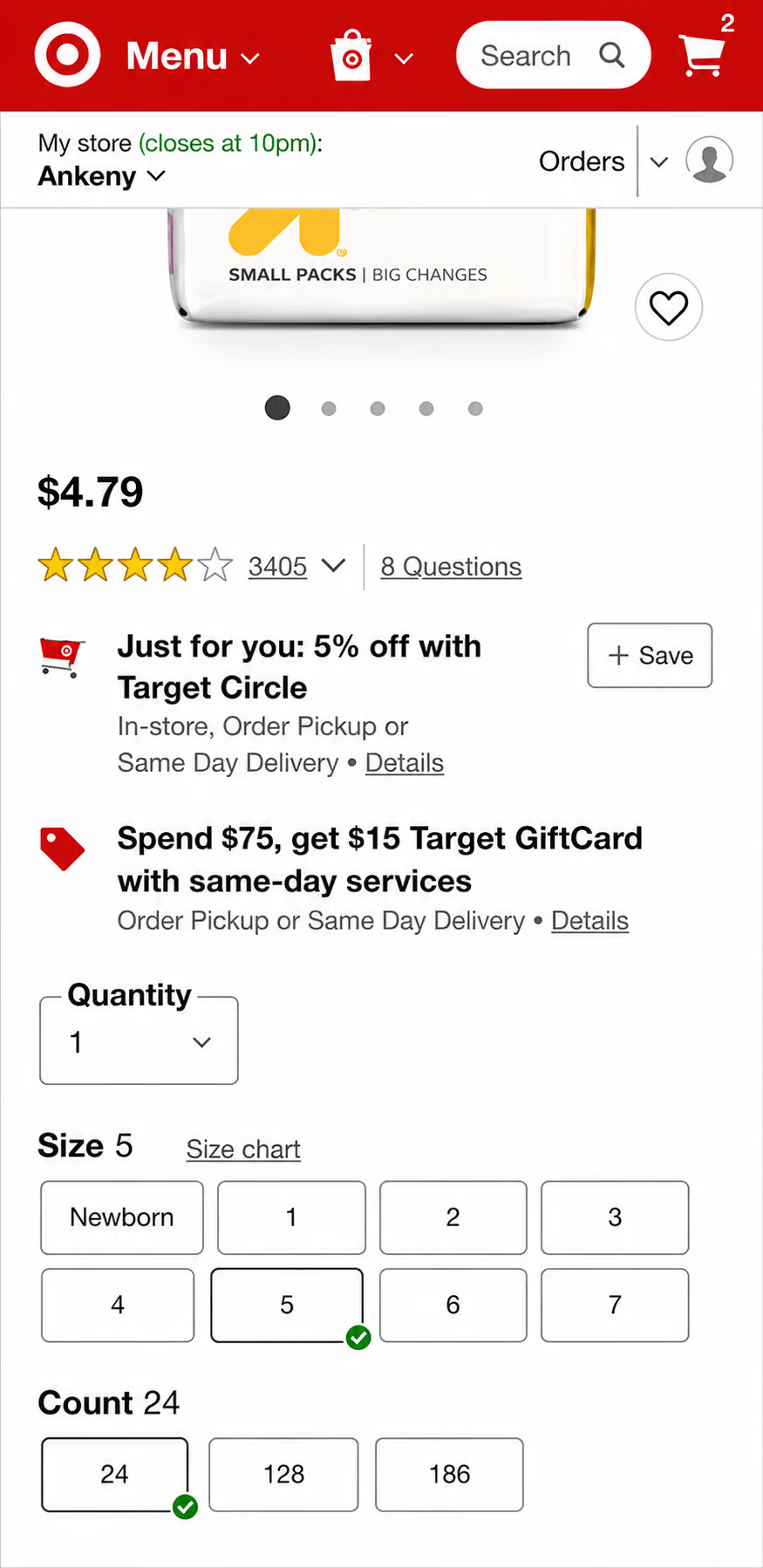
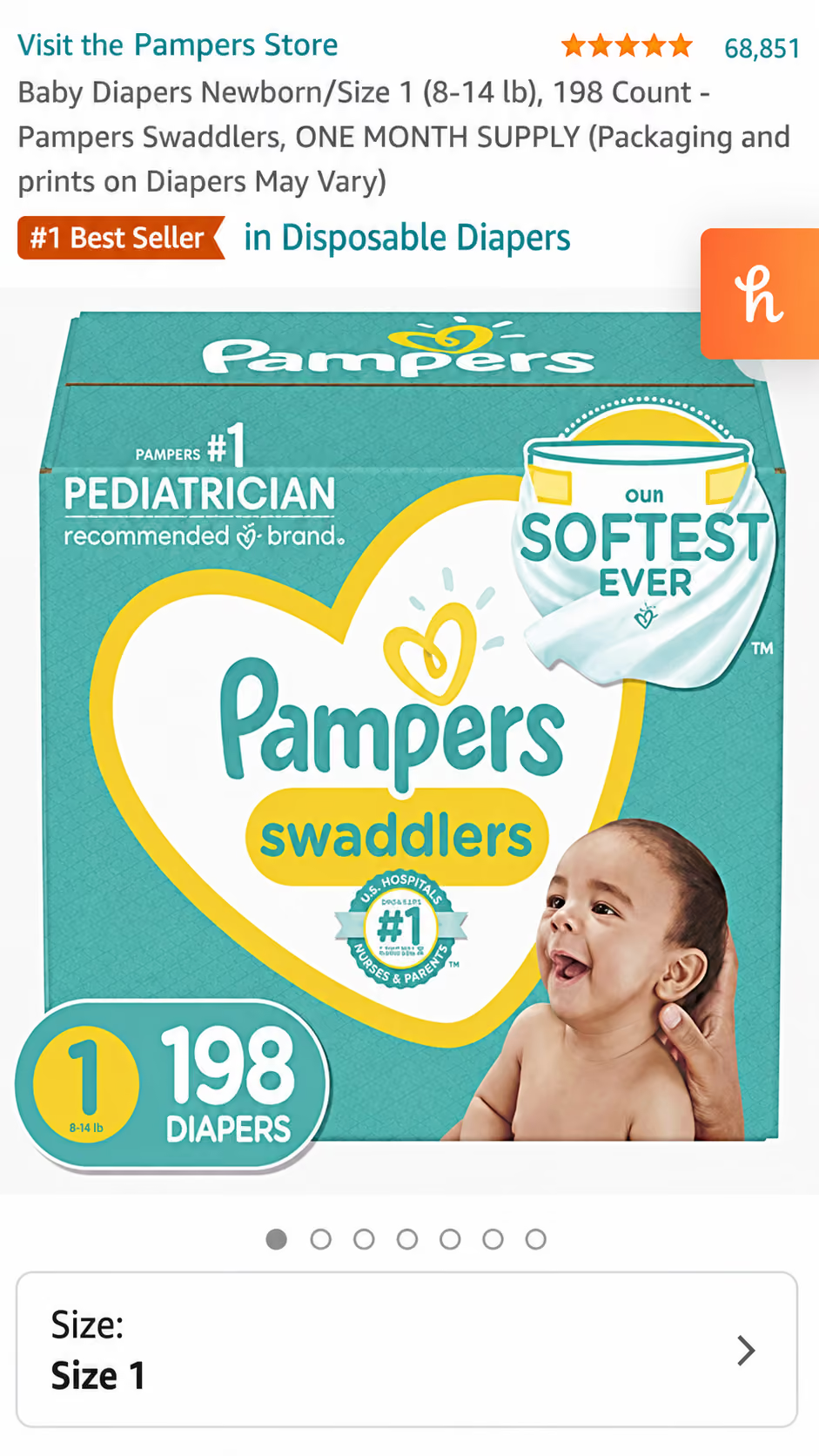
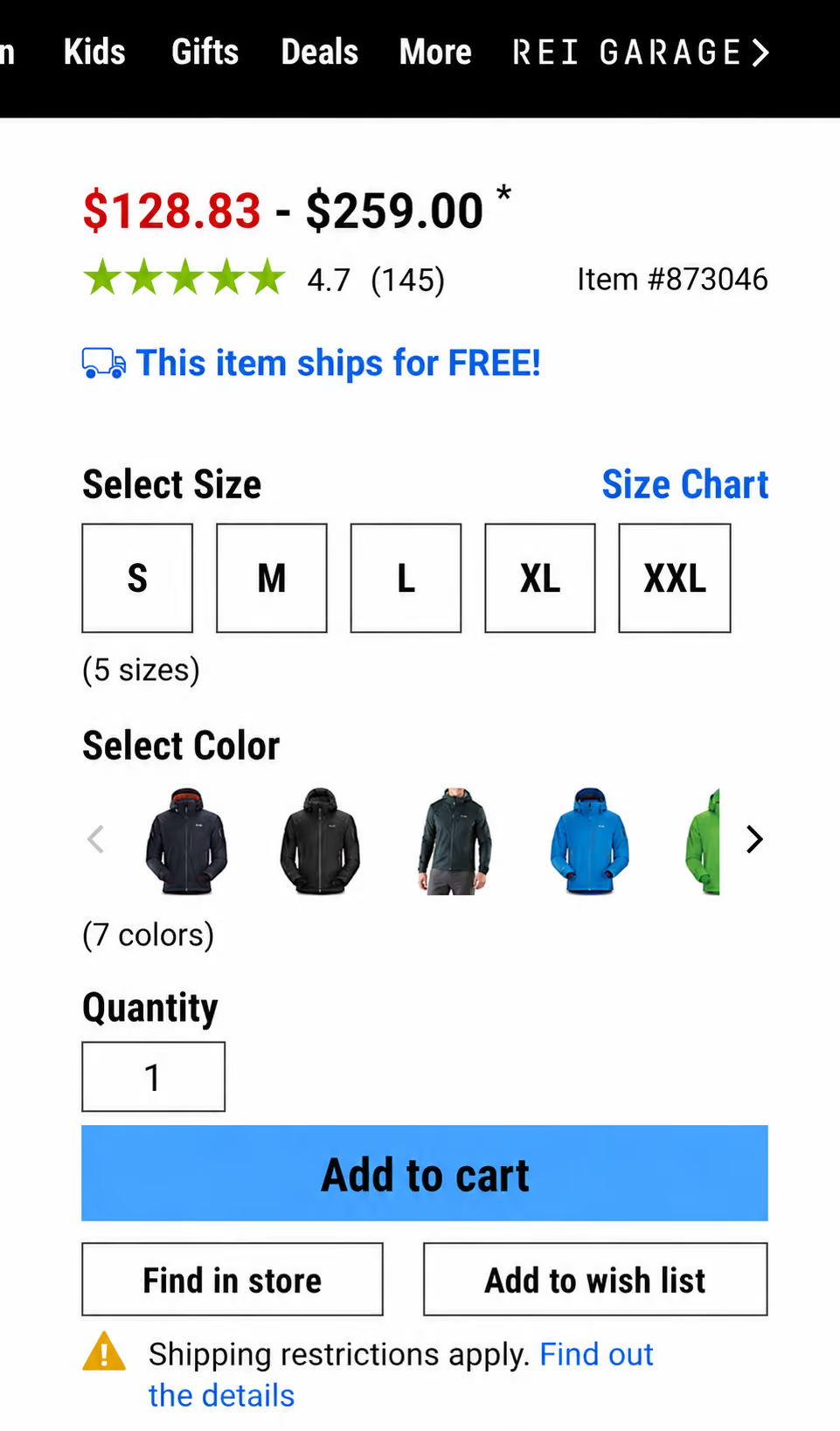
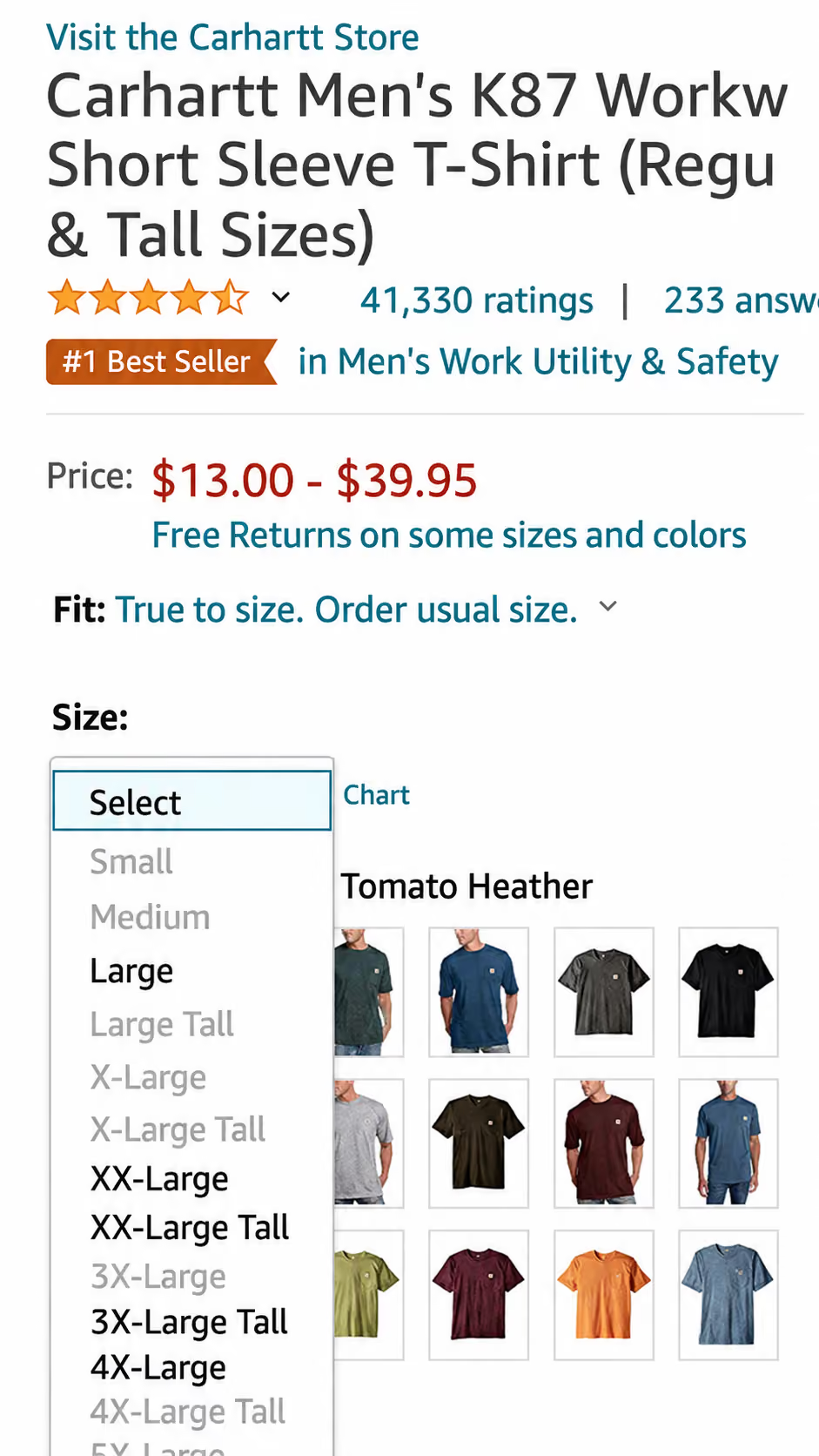
Competitive patterns across major retail platforms revealed consistent best practices for variation clarity, anchoring, and error prevention.
While implementations varied, successful experiences clearly distinguished primary products from selectable options, avoided invalid states, and maintained a stable sense of place as customers explored variations.
- Competitive analysis of platforms with complex variation, substitution, and grouping behavior
- Baymard Institute research on product configuration, choice architecture, and error prevention
- Collaborative ideation and story mapping with product and engineering
- Validation of proposed approaches against known edge cases
Key insights
I used the audit, cross-functional input, and competitive research to turn a complex set of catalog behaviors into shared product requirements. The challenge statement and story map helped Product and Engineering align on what customers were trying to do, where the experience needed more support, and what had to be addressed before moving into interface design.
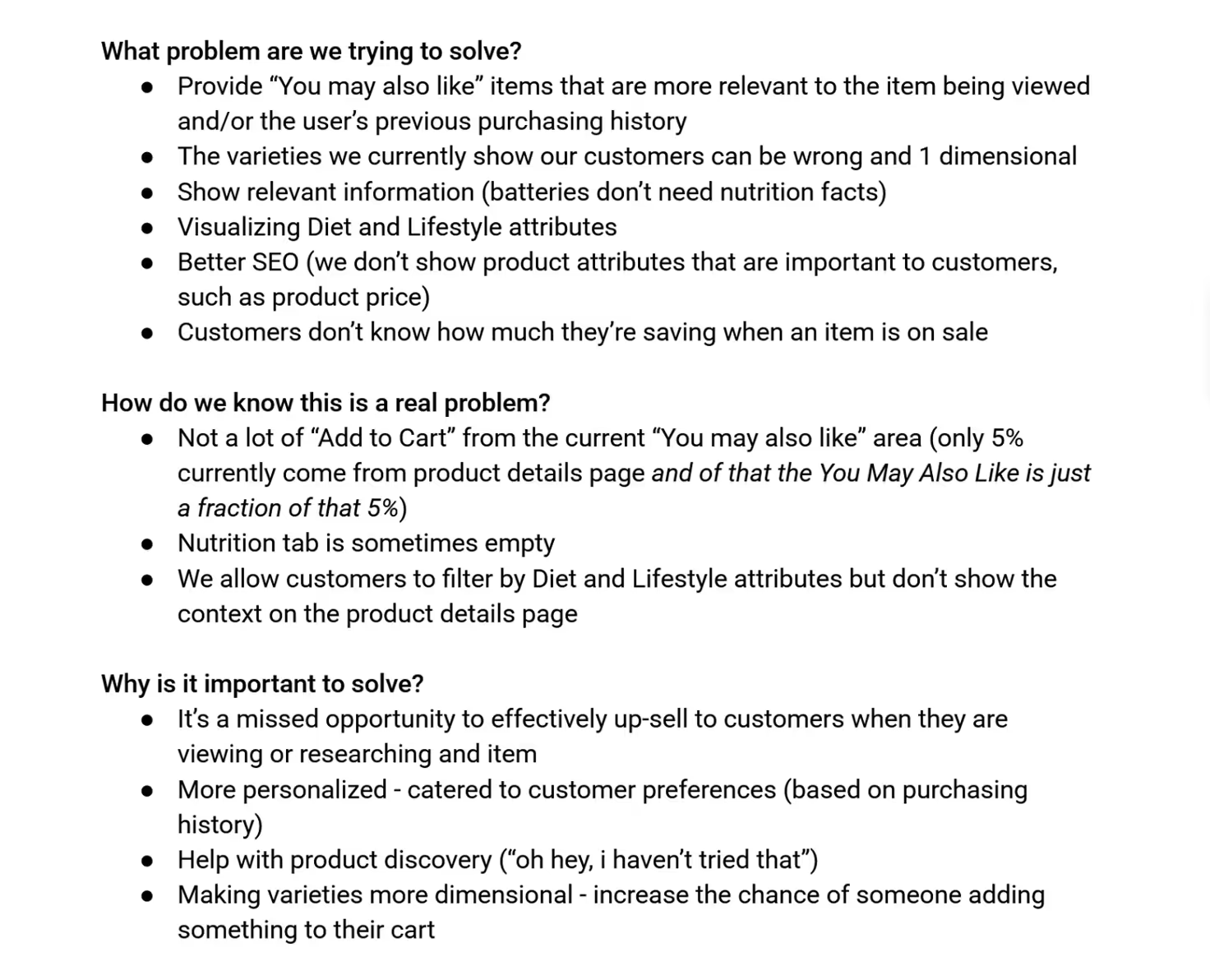
Challenge-definition worksheet from my discovery process, used to turn the audit findings into a shared definition of the variation challenge.
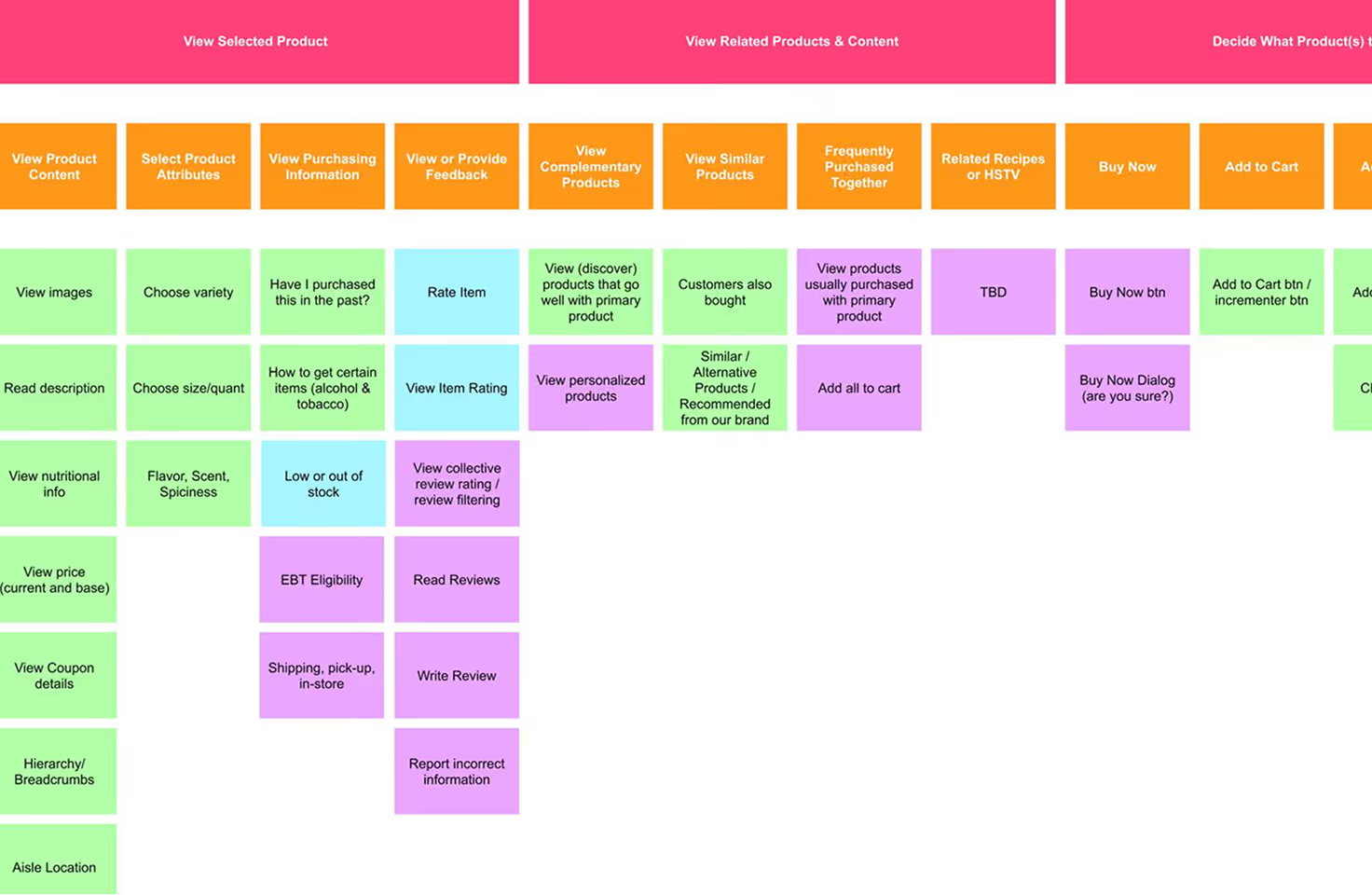
Story map from my discovery process, used to map the customer flow and organize the work around the variation model.
- Variation complexity lived at the system level Across 100+ audited products, variation behavior depended on upstream modeling and governance. Interface improvements depended on clear attribute definitions and durable rules upstream.
- ProdX’s standard model was designed around cleaner, more consistent data than the grocery catalog contained The platform worked well for simpler products, but broke down when applied to real-world catalogs involving substitutions, bundles, size hierarchies, and category-specific rules.
- Edge cases were everyday catalog reality Many of the most complex products were also commercially important. Getting those scenarios right directly supported customer trust, merchandising performance, and revenue.
- A stronger shared model would preserve future flexibility Adapting ProdX around explicit shared rules would preserve future flexibility and reduce hidden dependencies.
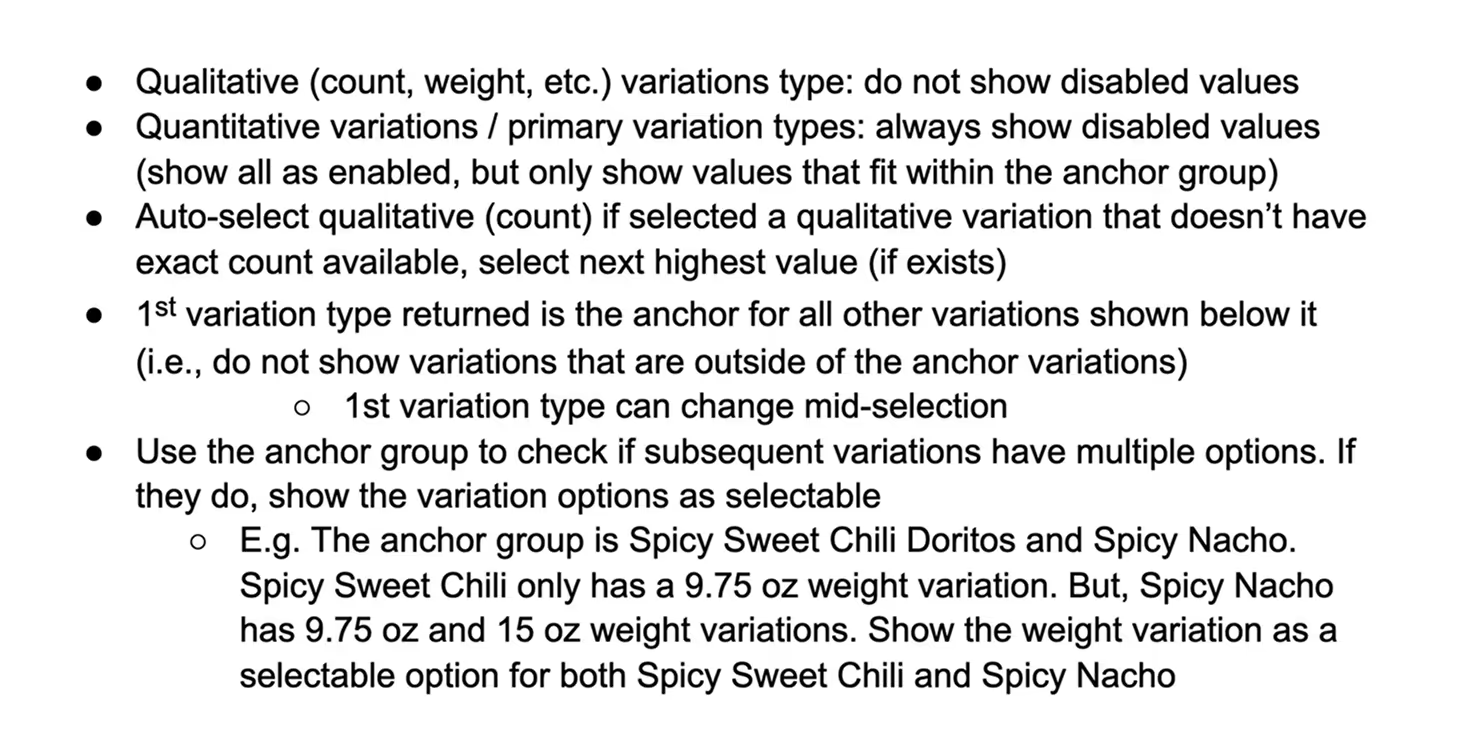
- Clear variation rules were required before experience design could succeed Explicit variation definitions, precedence, and exclusions gave downstream Design and Engineering a more predictable model to maintain.